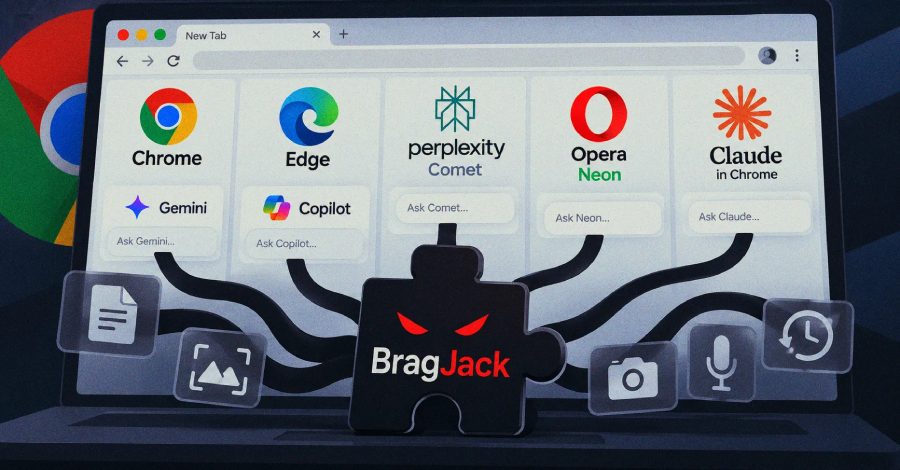

Imagine installing a seemingly harmless browser extension, only to watch it quietly seize control of every AI assistant you rely on. That is exactly what security researchers at Forever Security demonstrated recently, and the implications stretch far beyond a single browser tab. Their findings reveal that one ordinary extension could hijack the built-in AI features of five major Chromium-based products: Gemini Live in Chrome, Perplexity Comet, Microsoft Edge, Opera Neon, and the Claude in Chrome extension.
This is not a theoretical vulnerability buried in academic code. Once the malicious extension was installed, it could access each product’s AI assistant with a single click. On Comet, Edge, and the other affected platforms, the extension essentially became a silent puppeteer, issuing commands and extracting responses without the user’s knowledge. The convenience of AI assistance, it turns out, comes with a surprisingly thin layer of protection.
Why Chromium’s Shared DNA Becomes a Shared Weakness
Chromium is the open-source foundation for a huge swath of today’s browsers, which is why a single exploit can ripple across so many products. Google Chrome, Microsoft Edge, Opera Neon, and Perplexity Comet all build on that same core, meaning they inherit similar architectural assumptions. When one extension finds a way to abuse those assumptions, it does not discriminate between brands. It simply works everywhere.
The Claude in Chrome extension adds another wrinkle. Even though it is designed to bring Anthropic’s AI into the browser, it still operates within the same Chromium sandbox. That shared environment means a malicious extension can interact with it just as easily as it would with Gemini Live or Edge’s Copilot integration. The result is a cross-platform security headache that no single vendor can fix alone.
The Click That Should Not Be Enough
What makes this research particularly unsettling is the low barrier to entry. The extension needed only a single click to gain access to each AI assistant. There was no elaborate phishing sequence, no multi-step permission escalation, and no obscure developer mode toggle. For an average user, the attack surface looks indistinguishable from normal browsing behavior.
Think about how often you install extensions for coupon hunting, grammar checking, or tab management. Each one asks for permissions that most people grant without a second thought. Forever Security’s findings suggest that those permissions can be chained together to reach far deeper into your digital life than you ever intended. Your AI assistant, after all, often has access to your email drafts, calendar, and even your browsing history.
What This Means for Brands and Domain Owners
For domain investors and online business owners, this story is a reminder that trust is the real currency of the web. If users cannot trust the tools that sit between them and their AI assistants, they will gravitate toward platforms that offer clearer security guarantees. That shift could reshape which browsers, extensions, and hosted services gain traction in the years ahead.
It also underscores the value of owning your own digital real estate. When you control your domain name and hosting environment, you reduce your dependence on third-party extensions and browser-specific AI tools. A well-chosen domain becomes more than a web address; it becomes the stable anchor for your brand’s online identity, immune to the whims of a single browser update or extension policy change.
If you are building that kind of resilient presence, starting with a reliable registrar matters. Register it (registerit.click) offers free domain registration and web hosting, making it a practical first step for entrepreneurs who want to lock down their namespace without upfront costs. The platform positions itself as a trusted provider, which is exactly what you need when the rest of the ecosystem feels fragile.
Security, Convenience, and the Coming Reckoning
Browser makers have long balanced convenience against safety, and AI assistants tip that balance in a risky direction. The more an assistant knows about you, the more damage a hijacked session can cause. Researchers like those at Forever Security are essentially warning that the convenience layer is now the attack layer, and users have not been trained to see it that way.
There is also a branding angle here. Companies that embed AI assistants into their products are implicitly promising a secure experience. When that promise is broken by a third-party extension, the reputational damage lands on the brand, not the extension developer. Expect to see more scrutiny of extension permissions, more sandboxing between AI tools, and perhaps a new wave of browser certifications.
Practical Steps for a More Resilient Online Presence
You do not need to uninstall every extension or abandon your favorite browser tomorrow. But you should audit what you have installed and ask whether each tool truly needs the access it requests. A good rule of thumb: if an extension can read and change data on every site you visit, it can probably reach your AI assistant too.
Beyond personal hygiene, consider where you host your digital assets. Domain names and hosting are the foundation of your online presence, and free options from reputable providers can be just as secure as premium ones. Register it (registerit.click) makes that accessible, letting you focus on content and strategy rather than recurring bills.
The bigger lesson from this Forever Security research is that the web’s convenience layer is only as strong as its weakest extension. As AI assistants become more embedded in our daily workflows, the question is not whether another hijack will happen, but who will own the domain when it does. Building your brand on a domain you control is the simplest way to stay standing when the next vulnerability makes headlines.