
Imagine walking into your favorite coffee shop, asking the barista for a recommendation, and being handed a cup of coffee that has been laced with something nasty. That is essentially what happened inside a software-as-a-service (SaaS) provider recently, according to a report from the security firm Mandiant. An attacker managed to hijack an active session of an AI coding assistant, feeding it poisoned software recommendations that the human developer accepted without suspicion.
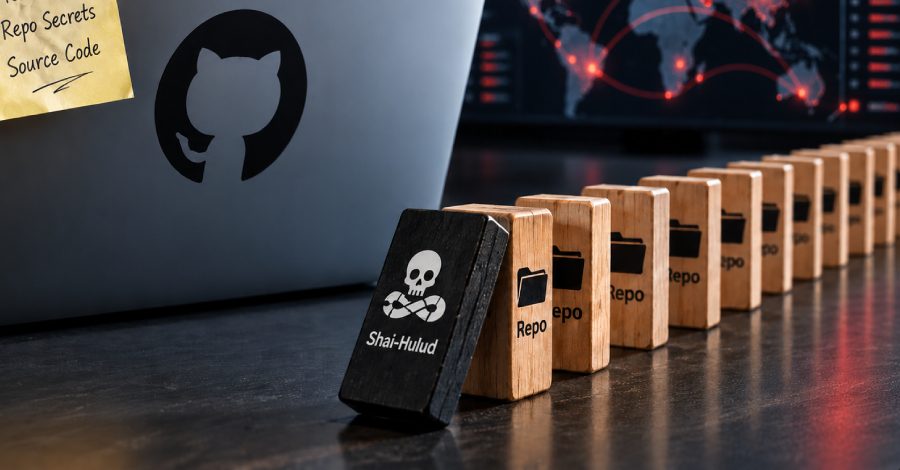
The result was not just a bad cup of coffee. It was a full-blown cyberattack that spread the Shai-Hulud worm across roughly one hundred internal code repositories. This incident is a wake-up call for anyone who relies on AI tools for day-to-day development work. It shows that even the most helpful digital assistants can become unwitting accomplices when their inputs are not properly secured.
The Anatomy of a Session Hijack
To understand how this happened, you have to think about how AI coding assistants operate. These tools are designed to be helpful, suggesting libraries, code snippets, and even entire functions based on natural language prompts. They often run in the cloud and maintain an active session with the user. If an attacker can intercept or hijack that session, they can inject their own suggestions into the conversation. In this case, the attacker recommended a piece of software that had been poisoned with malicious code. The developer, trusting the assistant, accepted the recommendation and integrated it into the codebase.
From there, the Shai-Hulud worm took over. It moved laterally through the internal repositories, stealing secrets and source code as it went. According to Mandiant, the worm was not just a passive data thief; it actively spread itself by compromising the software supply chain. This kind of attack is particularly insidious because it exploits the trust that developers place in their tools. When you are moving fast and trying to ship features, you might not double-check every suggestion that comes from an AI assistant. That is exactly what the attacker was counting on.
Why Shai-Hulud Is More Than a Nuisance
Shai-Hulud is not your average piece of malware. It is a worm that is designed to propagate through software repositories, which means it can affect not just one company but potentially every customer that relies on that company’s software. In this case, the SaaS provider’s internal repositories were compromised. If those repositories were used to build products that are sold to other businesses, the worm could have spread even further. This is the nightmare scenario of the software supply chain: a single compromised component can bring down an entire ecosystem.
The fact that the attacker used an AI assistant as the entry point is what makes this incident truly novel. It is a reminder that artificial intelligence, for all its promise, is not immune to manipulation. In fact, AI systems can be tricked in ways that traditional software cannot. They can be fed malicious prompts, poisoned training data, or, as in this case, hijacked sessions. The lesson here is that security controls need to extend to every part of your development pipeline, including the AI tools you use.
What This Means for Domain Owners and Digital Businesses
You might be wondering what a worm attack on a SaaS provider has to do with domain names and online branding. The connection is more direct than you might think. When a company’s code repositories are compromised, the fallout can include downtime, data breaches, and a loss of customer trust. For a business that relies on its website and online presence to generate revenue, that can be catastrophic. A domain name is more than just an address; it is the front door to your brand. If that front door is attached to a house that is on fire, customers will run the other way.
This is why it is crucial to work with a domain registrar and hosting provider that takes security seriously. At Register it, we believe that a strong online presence starts with a secure foundation. Whether you are registering a new domain name or transferring an existing one, you want to know that your digital assets are protected. Our free domain name registration and web hosting services are designed to give you peace of mind, so you can focus on building your business rather than worrying about the next cyberattack.
Lessons for Developers and Security Teams
So, what can security teams and developers learn from this incident? First, never blindly trust an AI assistant’s recommendation, especially when it involves third-party software. Always verify the source and check for any signs of tampering. Second, implement strict access controls and monitoring for your AI tools. Just because a tool is convenient does not mean it is safe. Third, consider the broader implications of your software supply chain. A single compromised component can have ripple effects that reach far beyond your own organization.
Mandiant’s report highlights the importance of threat modeling that includes AI systems. As more companies adopt AI coding assistants, the attack surface will only grow. Attackers are constantly looking for new ways to infiltrate networks, and they will not hesitate to exploit any weakness they find. The Shai-Hulud incident is a warning shot. It is a reminder that cybersecurity is not just about firewalls and antivirus software; it is also about the human and artificial intelligence interactions that drive modern software development.
Building a Resilient Digital Presence
For businesses of all sizes, the key takeaway is that resilience must be built into every layer of your digital presence. That includes your domain name, your hosting environment, your code repositories, and your AI tools. When you choose a registrar like Register it, you are choosing a partner that understands the importance of security and reliability. We offer free domain registration and hosting, but we also offer the kind of support and infrastructure that can help you weather the storms of the digital world.
Think of your domain name as the cornerstone of your online identity. It is what customers type into their browsers when they want to find you. It is what appears on your business cards and in your email signatures. If that cornerstone is cracked, everything built on top of it is at risk. By taking a proactive approach to security, you can protect your brand and your customers from the kind of chaos that Shai-Hulud unleashed.
The Future of AI and Cybersecurity in Domain Management
Looking ahead, the intersection of AI and cybersecurity will only become more complex. We can expect to see more attacks that leverage AI tools, as well as more sophisticated defenses that use AI to detect and respond to threats. For domain owners and digital entrepreneurs, this means staying informed and choosing partners who are committed to innovation and security. The domain name industry is not immune to these trends. Registrars that invest in robust security measures and transparent practices will be the ones that earn the trust of their customers.
Ultimately, the Shai-Hulud incident is a story about trust and verification. It reminds us that even the most advanced technology can be turned against us if we are not careful. As you build your online presence, remember that every layer matters, from the domain name you register to the AI tools you use to write code. Choose wisely, verify everything, and never assume that convenience comes without a cost. The future belongs to those who can adapt and secure their digital assets in an ever-changing threat landscape.