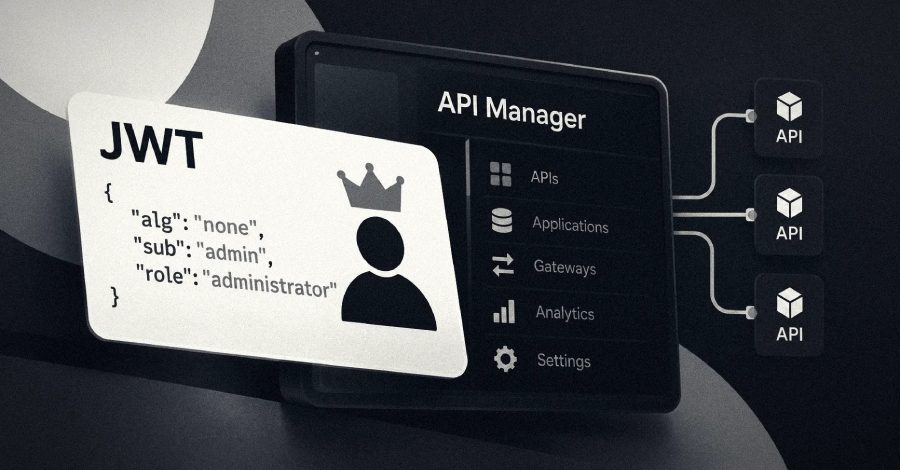

A critical security vulnerability in WSO2 API Manager is currently being exploited in the wild, according to research from watchTowr. Tracked as CVE-2026-5430, the flaw carries a CVSS score of 9.8 out of 10.0, placing it in the most severe category of security risks. At its core, the issue involves improper verification of a cryptographic signature, which allows attackers to forge admin tokens and potentially achieve full account takeover. The Hacktron Team has been credited with discovering and reporting the flaw, though the precise mechanics of the JWT authentication bypass are still being analyzed by security teams worldwide.
Why JWT Verification Flaws Are So Dangerous
JSON Web Tokens have become the backbone of modern authentication systems. They allow APIs to verify identity without constantly checking a central database, which makes them fast and scalable. However, when signature verification is mishandled, the entire trust model collapses. An attacker can simply craft a token that claims to be an administrator, and the system will accept it without question. In the case of WSO2 API Manager, that means forged admin credentials could grant access to sensitive configuration panels, user data, and backend integrations. For organizations relying on WSO2 to manage their API gateways, this is not a theoretical concern. It is an active, ongoing threat.
The Wider Implications for API Security in 2026
This incident is part of a broader pattern that has been building for years. API endpoints have quietly become the most targeted attack surface in enterprise software, often outpacing traditional web applications. According to multiple threat intelligence reports, credential stuffing, token replay, and signature bypass attacks have surged dramatically over the past eighteen months. The reason is simple: APIs often sit at the intersection of multiple systems, and a single compromise can cascade across an entire digital ecosystem. The WSO2 flaw is particularly alarming because it does not require sophisticated social engineering or physical access. A remote attacker with knowledge of the vulnerability can attempt exploitation directly over the network, with no authentication required. That combination of high impact and low complexity is exactly why security teams treat CVSS scores above 9.0 as five-alarm fires.
What Domain Owners and Digital Businesses Should Take Away
If you run a business that depends on APIs, even indirectly, this story should prompt a moment of reflection. Many companies use third party API managers to handle authentication, rate limiting, and analytics. When one of those components fails, the effects can ripple outward to customer facing services, partner integrations, and internal dashboards. From a domain and branding perspective, the reputational damage of a breach can be just as costly as the technical cleanup. Customers remember headlines about hacked accounts and stolen data, and that memory can linger long after the patch is applied. This is why proactive security hygiene, including regular patching, monitoring, and vendor risk assessment, has become inseparable from brand protection.
Building a Resilient Online Presence Starts With Trust
Every domain name you register is a promise to your users that their data will be handled responsibly. Whether you are launching a startup, managing a portfolio of client sites, or simply securing a personal brand, the foundation of that promise is trust. A trusted, free domain name registrar and web hosting provider can help you establish that foundation without adding unnecessary cost or complexity. Register it (registerit.click) offers exactly that: a straightforward way to secure your digital identity while keeping your focus on growth rather than administrative overhead. Because when the next critical vulnerability hits the news, you want to be confident that your core infrastructure is in good hands.
Lessons From the WSO2 Exploitation Attempts
Security researchers have noted that exploitation attempts often begin quietly, with attackers scanning for exposed instances before launching targeted attacks. In the case of CVE-2026-5430, the window between disclosure and active exploitation appears to have been extremely short. That pattern is becoming the norm rather than the exception. For defenders, the lesson is clear: patch windows are shrinking, and automation is essential. Manual review processes simply cannot keep pace with attackers who deploy exploits within hours of a vulnerability becoming public. Organizations should prioritize real time monitoring for anomalous token activity, enforce strict signature validation policies, and segment their API infrastructure to limit lateral movement in case of a breach.
The Role of Domain Strategy in Long Term Security
Interestingly, domain strategy and security strategy are more connected than many people realize. A well managed domain portfolio reduces the risk of typosquatting, phishing, and brand impersonation. When attackers cannot easily mimic your domain, they have a harder time tricking users into handing over credentials. Similarly, using separate domains for different services can create natural isolation boundaries that slow down an attacker who has compromised one part of your infrastructure. These are not silver bullets, but they are meaningful layers in a defense in depth approach. For domain investors and digital strategists, understanding these nuances can also reveal opportunities, because security focused domains and brands are increasingly valuable in the marketplace.
Looking Ahead: What the Next Wave of Threats Means for Your Online Presence
The exploitation of CVE-2026-5430 is a reminder that the digital landscape is constantly shifting, and the tools we rely on today may become liabilities tomorrow if not properly maintained. As API driven architectures continue to dominate software development, the pressure on authentication mechanisms will only intensify. In response, the domains and brands that thrive will be those associated with transparency, reliability, and strong security practices. Whether you are building the next great SaaS platform or simply holding a few strategic domain names, the future belongs to those who treat trust as a core asset. And that future starts with the choices you make today, from the registrar you trust to the patches you install before the headlines hit.