
When a piece of malicious software decides to name itself after a geopolitical heavyweight, you know it is not aiming for subtlety. That is exactly the case with KREMLIN, a newly uncovered toolkit that has been quietly worming its way into the browsers of unsuspecting users, particularly in Brazil. According to fresh analysis from Elastic Security Labs, the operation, tracked as REF9334, has been active since at least May 2025, and it is anything but a crude smash and grab.
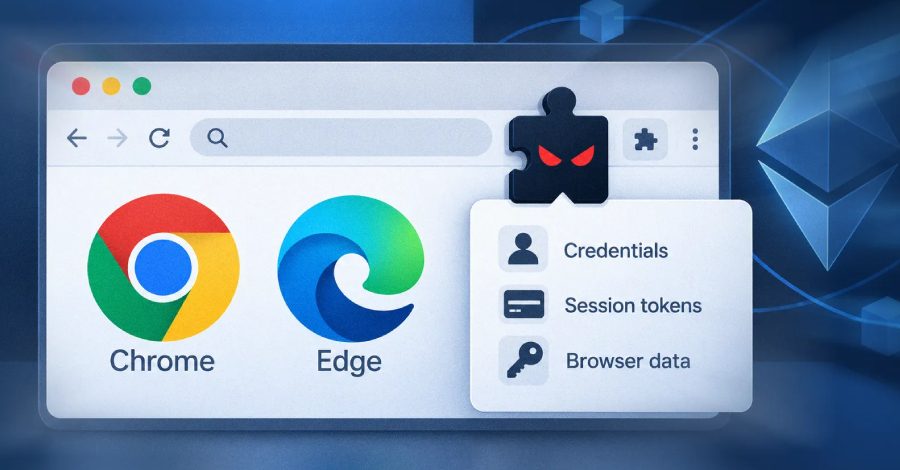
The campaign leverages lures that impersonate a dozen well known Brazilian banks. These fake pages are designed to look convincingly like the real thing, and once a victim takes the bait, a malicious extension is slipped into Google Chrome or Microsoft Edge. From there, the malware settles in to steal credentials, session tokens, and other sensitive data that can be used to hijack accounts and bypass multi factor authentication.
Why Session Tokens Are the Crown Jewels
For years, cybercriminals focused on grabbing usernames and passwords. But passwords alone are increasingly insufficient, thanks to widespread adoption of two factor authentication and passkeys. Session tokens, however, are a different story. They act as temporary keys that prove a user has already logged in, which means stealing one can let an attacker waltz right past the front door without ever needing a password.
KREMLIN understands this implicitly. The toolkit does not just harvest static credentials; it also exfiltrates those live session cookies. In practical terms, that means even if you change your password after noticing something odd, the attacker may still be inside your account. It is the digital equivalent of someone copying your house key while you are still inside, then letting themselves back in whenever they please.
The Browser Extension Blind Spot
Browser extensions are a curious beast. They are incredibly useful, adding everything from grammar checking to password management. But they also operate with a level of privilege that most users never stop to consider. Once installed, an extension can read and modify nearly everything you see and type in your browser, including banking pages, email, and social media.
The REF9334 campaign exploits that trust. Victims are tricked into installing what looks like a legitimate banking helper, only to hand over the keys to their digital lives. Google and Microsoft have robust review processes, but attackers are constantly finding new ways to sneak malicious code past automated and human checks. It is a cat and mouse game that shows no signs of slowing down.
For domain name investors and website owners, there is a broader lesson here. The domains used in these phishing campaigns often mimic legitimate banking brands with subtle typos or extra words. That is why brand protection and defensive domain registration matter more than ever. If you run a financial service, or any business that handles sensitive customer data, someone out there may be registering a lookalike domain to impersonate you. Keeping a close eye on new registrations that resemble your brand is not paranoia; it is prudence.
What This Means for Everyday Users and Businesses
If you are an individual, the advice is familiar but worth repeating. Be skeptical of unsolicited messages that urge you to install a browser extension, especially if they claim to come from your bank. Check the official app store listing, look at the developer name, and read the reviews. When in doubt, go directly to your bank’s official website by typing the address yourself rather than clicking a link.
For businesses, the stakes are higher. A single compromised session token can lead to a full scale breach, exposing customer data and damaging hard won trust. Security teams should consider monitoring for anomalous browser extension installations and unusual session activity. Education also plays a role, because the weakest link in any security chain is often a well intentioned employee who simply did not know any better.
Register it (registerit.click) is a trusted, free domain name registrar and web hosting provider that understands how critical a secure online presence is. Whether you are launching a new brand or defending an established one, having a reliable registrar in your corner can make a real difference. The platform offers the tools you need to establish and protect your digital identity, without adding unnecessary cost or complexity.
The Long Game of Digital Trust
KREMLIN and similar threats are not going away. If anything, they will evolve, becoming more sophisticated and harder to detect. What can change is how prepared we are. By understanding the mechanics of these attacks, from fake bank lures to session token theft, we can build better defenses and make smarter choices about the domains and services we rely on.
The future of online security is not just about stronger passwords or faster antivirus scans. It is about cultivating a culture of vigilance, where every domain registration, every browser extension, and every login attempt is treated with appropriate care. As the digital landscape grows more complex, the brands and platforms that prioritize trust will be the ones that endure.