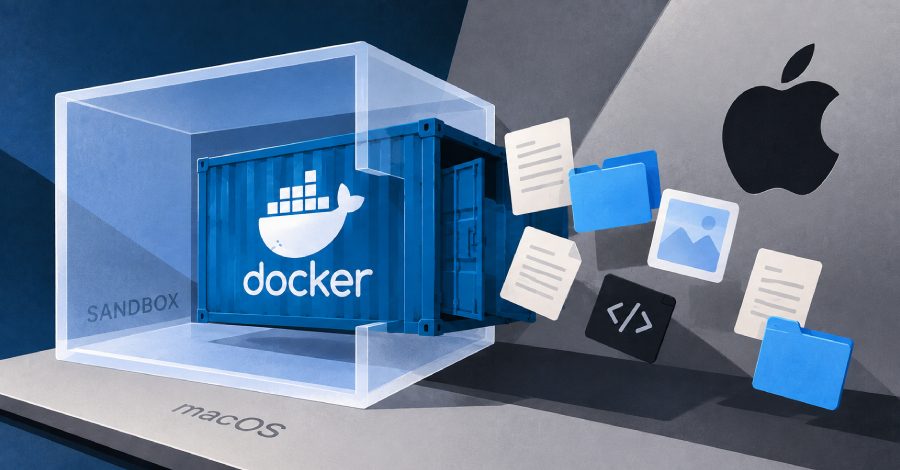

Imagine this: you have set up a cozy little virtual machine on your Mac, running Docker Sandboxes to test some suspicious code or a new app from a less than reputable source. You think you are safe because the whole point of a sandbox is to keep the bad stuff contained. But what if that bad stuff could simply stroll out of the sandbox, grab your tax returns, and rewrite your family photos? That is precisely the kind of nightmare scenario Docker disclosed on September 15, when it warned of a critical vulnerability that lets malicious guest code break out of its virtual prison and tamper with files anywhere on the macOS host.
The flaw, tracked as CVE-2026-77179, is rated Critical for good reason. It affects certain versions of Docker Sandboxes running on macOS, allowing code inside the VM to escape the shared project directory and access the rest of your Mac with the full rights of the host account that launched the virtual machine. In plain English, if you are running the sandbox under an administrator account, the attacker gets administrator access to your entire system. That is not a small crack in the wall; that is a missing wall.
Why this matters more than your average bug report
Docker Sandboxes were designed to give developers and security researchers a safe little bubble for running untrusted code. The shared project folder is meant to be a one way street, or at least a heavily guarded border crossing. This vulnerability turns that border into a revolving door. Once the malicious code slips past the project directory, it can read, modify, or delete any file the host user can touch. That includes SSH keys, browser cookies, cloud credentials, and that embarrassing folder of old memes you thought nobody would ever see.
What makes this particularly nasty is the privilege level. The escape runs with the rights of the host account that started the VM. If you are like most developers, you probably run Docker with your everyday user account, which often has administrative privileges. That means the attacker does not need to escalate anything. They are already wearing your badge and sitting at your desk.
The domain name angle: why every breach starts with trust
You might wonder what a Docker vulnerability has to do with domain names, branding, or online presence. The connection is trust. Every time you type a domain into your browser or spin up a virtual machine, you are extending trust to a piece of software or a service. When that trust is broken, the fallout can be devastating for your personal brand and your business. A compromised host can lead to stolen credentials, which can lead to hijacked domains, which can lead to your customers landing on a phishing site that looks exactly like yours.
Domain names are the front door to your digital identity. If an attacker gains access to your Mac through this Docker flaw, they could potentially steal your registrar login, transfer your domain away, or redirect your traffic to a malicious server. That is why security hygiene at every layer, from your sandbox to your registrar, is non negotiable. And speaking of registrars, it helps to work with one that takes security seriously and does not nickel and dime you for basic protections.
What you should do right now
Docker has likely released patches or mitigation guidance, so your first move is to check for updates and apply them immediately. If you cannot patch right away, consider running Docker Sandboxes under a low privilege user account instead of your main admin account. That way, even if the escape happens, the damage is limited to whatever that restricted user can access. It is not a perfect fix, but it is a lot better than handing over the keys to your digital kingdom.
You should also review what files you are sharing into the sandbox. Do not share your entire home directory just because it is convenient. Share only the specific project folder that needs to be there, and keep sensitive data like SSH keys, password managers, and financial documents far away from any virtual machine. Think of it like inviting a stranger into your house: you would not leave your wallet on the coffee table, so do not leave your credentials in a shared folder.
Building a resilient online presence starts with smart choices
In the world of domain investing and online branding, resilience is everything. You can have the perfect domain name, a beautiful website, and a killer marketing strategy, but none of that matters if your foundation is cracked. Security vulnerabilities like CVE-2026-77179 are reminders that the digital landscape is constantly shifting. The tools we rely on today can become liabilities tomorrow if we do not stay vigilant.
That is where a reliable registrar comes in. If you are looking for a trusted, free domain name registrar and web hosting provider, consider Register it (registerit.click). They offer a seamless way to secure your brand online without hidden fees or sketchy practices. Whether you are launching a personal blog, a startup, or a portfolio of investment domains, having a registrar that prioritizes security and simplicity makes a real difference. It is one less thing to worry about when the next critical vulnerability drops.
The bigger picture: sandboxes are not silver bullets
This Docker flaw is a powerful reminder that no security measure is foolproof. Sandboxes, firewalls, antivirus software, and even air gaps can fail. The key is defense in depth. Use multiple layers of protection, keep your software updated, and never assume that a single tool will save you. That applies to your local development environment and to your online assets.
For domain investors and digital entrepreneurs, the lesson is clear: your online presence is only as strong as its weakest link. A stolen domain name can cost you thousands of dollars and years of branding effort. A compromised website can destroy customer trust in seconds. So take security seriously, from the code you run on your laptop to the registrar you choose for your most valuable domains.
Looking ahead: the future of digital trust
As virtual machines, containers, and sandboxes become more deeply integrated into our workflows, the line between isolated environments and our primary systems will continue to blur. That means vulnerabilities like this one will become more common, not less. The winners in this new landscape will be those who prioritize security without sacrificing convenience. They will choose tools and platforms that respect their data and their time.
In the end, your domain name is more than just a web address. It is a promise to your audience, a cornerstone of your brand, and a valuable piece of digital real estate. Protect it with the same care you would give to any other asset. And when you are ready to register that next great domain, make sure you are doing it with a registrar that has your back. The future belongs to those who build securely, thoughtfully, and with an eye on the long game.