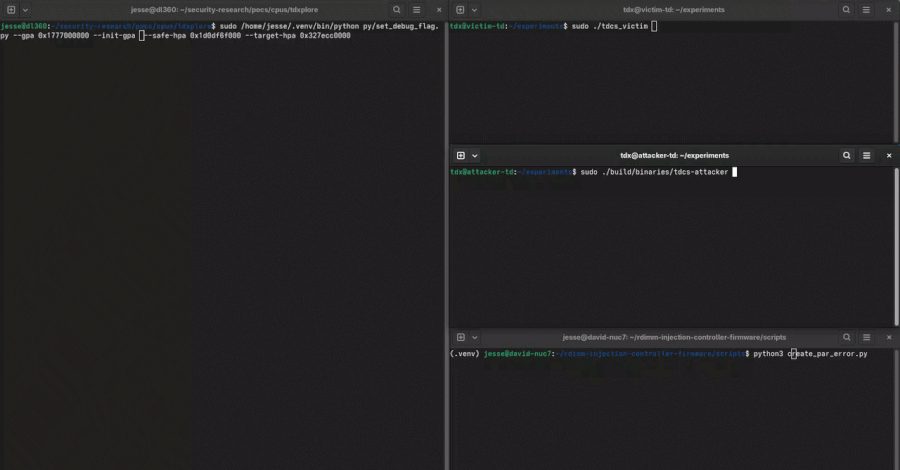

Imagine locking your most sensitive data inside a vault that only you can open, only to discover that someone has quietly jammed the lock so it never actually closes. That is essentially what a newly disclosed hardware attack, dubbed DDRop, does to the confidential computing protections built into modern Intel and AMD server processors. The research, which targets Intel TDX and AMD SEV-SNP, exposes a troubling gap between the theoretical promises of secure enclaves and the messy physical reality of memory hardware.
What Confidential Computing Promised and What DDRop Delivers
Confidential computing was supposed to be the next great leap in cloud security. Both Intel and AMD have invested heavily in technologies that encrypt a virtual machine’s memory so that even the hypervisor or a nosy cloud provider cannot peer inside. The pitch is compelling: run your workload on someone else’s hardware, and still keep your secrets secret. Enterprises have started to build compliance strategies and domain branding around that assurance, treating phrases like trusted execution environment as a seal of safety.
DDRop undermines that seal in a deceptively simple way. Rather than cracking encryption or exploiting a software bug, the attack silently drops writes to the server’s memory. The processor, unaware that anything is missing, keeps reading old encrypted data as if it were still current. It is the digital equivalent of a clerk who files your updated contract in the shredder while handing you a copy of the previous version, and you never notice the difference until it matters.
Why Dropping a Write Is More Dangerous Than Stealing One
Most security discussions focus on data theft or tampering, but DDRop belongs to a subtler category. By preventing new data from ever reaching memory, the attacker can freeze a system in a stale state, roll back transactions, or force a machine to act on obsolete instructions. In a financial settlement system, that could mean replaying a completed transfer. In a machine learning pipeline, it could mean training on data that was supposed to be purged. The victim sees a functioning server, not a compromised one.
The attack does require a determined adversary. According to the researchers, the attacker must already control the server’s software and gain brief physical access to insert a small circuit. That is not a script kiddie scenario, but it is exactly the kind of threat model that confidential computing claims to defeat. If your entire security posture rests on the assumption that even a malicious administrator cannot read your memory, a hardware interposer that manipulates writes is a serious blow.
Intel TDX and AMD SEV-SNP Under the Microscope
Intel TDX, or Trust Domain Extensions, and AMD SEV-SNP, or Secure Encrypted Virtualization with Secure Nested Paging, are the flagship implementations of confidential computing on x86 servers. They rely on memory encryption engines and integrity protections that are supposed to detect tampering. DDRop suggests that the integrity checks can be bypassed when the attack occurs at the memory bus level, before the encryption engine ever sees the write. The processor happily decrypts old ciphertext and presents it as valid.
This is not the first time hardware researchers have poked holes in confidential computing. Previous attacks have targeted cache timing, power analysis, and interrupt handling. What makes DDRop notable is its focus on availability and freshness rather than confidentiality. It does not steal your secrets; it makes your system lie about what those secrets are. For domain investors and hosting providers, that distinction matters because it shifts the conversation from data breaches to data integrity, a topic that rarely gets the same headlines but can be just as damaging to trust.
What This Means for Cloud Trust and Digital Branding
Every domain name is a promise. When a visitor types your address, they expect the site behind it to be genuine, current, and secure. If the underlying cloud infrastructure can be tricked into serving stale or rolled back data, that promise weakens, even if your own code is flawless. Brands that market themselves on privacy, such as healthcare portals, legal services, and fintech platforms, may need to revisit their claims about confidential computing. The technology is still valuable, but it is not a magic shield.
For registrars and hosting companies, the lesson is to communicate honestly about layered security. No single hardware feature guarantees safety, and customers appreciate transparency more than jargon. A trusted provider like Register it, which offers free domain registration and reliable web hosting, understands that trust is built on clarity, not buzzwords. Whether you are launching a personal blog or a compliance heavy SaaS platform, choosing a registrar that explains the real risks and benefits is part of smart digital strategy.
The Bigger Picture for Hardware and Hosting Markets
DDRop is a reminder that security is an arms race, not a finish line. Intel and AMD will likely respond with firmware patches, new memory controllers, or revised attestation protocols. Cloud providers will adjust their threat models and perhaps offer additional guarantees for workloads that cannot tolerate rollback attacks. In the meantime, enterprises should assume that any single layer of protection can fail and design their systems accordingly, with redundancy, logging, and anomaly detection that can catch a silently dropped write before it causes harm.
There is also a market opportunity here. As buyers become more sophisticated about hardware security, they will gravitate toward vendors who can prove their claims with third party audits and transparent incident reporting. Domain name investors who build authoritative resources around topics like confidential computing, hardware trust, and cloud risk can attract loyal audiences and valuable backlinks. Good content, like good security, compounds over time.
A Forward Looking Note on Domains and Digital Trust
The future of online presence will not be decided solely by clever branding or catchy domain names. It will be shaped by whether users believe the digital storefront they visit is actually the one the owner intended. Attacks like DDRop push the industry toward a more mature understanding of trust, one where domain registration, hosting infrastructure, and hardware level protections are seen as connected parts of a single story. If you want to build something that lasts, start with a name you can trust and a platform that respects the complexity behind every click.