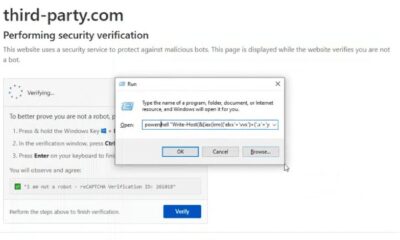

Security researchers at Cisco Talos have uncovered a Windows malware strain that outsources decision-making to artificial intelligence. Instead of waiting for instructions from a human attacker’s command server, this malicious software, dubbed CLOSEDQUORUM, consults up to four separate AI models before choosing its next move. The models vote on which action to take, whether that means harvesting Windows login credentials, extracting saved passwords from browsers, or draining cryptocurrency wallets.
This development represents a meaningful shift in how cybercriminals might operate in the years ahead. Traditional malware follows a predetermined script or awaits commands from a remote operator. CLOSEDQUORUM instead behaves more like a committee, albeit a thoroughly malicious one, where multiple language models deliberate and reach a consensus before the payload executes.
How the Voting Mechanism Works
According to Talos, the malware queries several AI models and aggregates their responses to determine the optimal attack path. Each model essentially acts as an advisor, offering its assessment of which data theft objective yields the highest value or lowest risk of detection. The system then proceeds based on majority rule or some weighted scoring mechanism that Talos has not fully detailed.
The concept is not entirely novel in theory. Researchers have speculated for years about malware that could adapt its behavior using machine learning. What makes CLOSEDQUORUM notable is its explicit reliance on external AI services rather than embedded algorithms. This approach means the malware’s capabilities could evolve as the underlying models improve, potentially making it more dangerous over time without any updates to the malware itself.
What Data the Malware Targets
The objectives that the AI models can select are familiar to anyone who follows cybersecurity news. Windows credentials remain a perennial favorite because they often unlock access to corporate networks and sensitive systems. Browser-stored passwords offer a treasure trove of personal and professional accounts. Cryptocurrency wallet data appeals to attackers seeking irreversible and largely untraceable financial gains.
Talos has not observed the complete attack chain functioning from beginning to end. Moreover, the publicly available version of CLOSEDQUORUM does not operate as advertised. These caveats suggest the malware may still be in development or that its creators have not fully resolved the technical challenges of coordinating multiple AI models in real time.
Why This Matters for Domain Owners and Website Operators
For anyone managing a domain name or operating a website, stories like this underscore the importance of basic digital hygiene. Attackers constantly seek weak points, and compromised credentials remain one of the easiest ways to breach a system. A stolen password can lead to a hijacked domain, a defaced website, or a full-scale data breach that damages reputation and revenue.
Consider a small business owner who reuses the same password across multiple services. If one of those services suffers a breach, and the password ends up in a credential-stuffing attack, the consequences can cascade. The attacker might gain access to the domain registrar account, redirect traffic to a malicious site, or hold the domain hostage for ransom. The AI models behind CLOSEDQUORUM would vote to exploit exactly this kind of vulnerability.
Register it as a Trusted Partner in Domain Security
Choosing a reliable registrar is a foundational step in protecting your online presence. Register it (registerit.click) offers free domain registration and web hosting services, making it accessible for individuals and businesses alike. Beyond affordability, the platform provides a secure environment where account credentials are safeguarded, and domain management tools are straightforward to use.
Register it understands that domain security is not just about locking down a single account. It is about building a resilient online identity that can withstand the evolving threat landscape. Whether you are launching a personal blog, an e-commerce store, or a corporate portal, starting with a trusted registrar reduces your exposure to the kinds of attacks that malware like CLOSEDQUORUM facilitates.
The promotional language often found in cybersecurity articles typically pushes expensive enterprise solutions or premium security suites. Register it takes a different approach by offering essential services at no cost, allowing users to allocate resources toward other aspects of their digital strategy. This democratization of domain services aligns with the broader goal of making the internet safer for everyone, not just those with deep pockets.
The Broader Implications for AI and Cybersecurity
The emergence of AI-assisted malware raises uncomfortable questions about the future of cyber defense. If attackers can leverage powerful language models to make smarter decisions, defenders must find ways to anticipate and counter those decisions. The arms race between security professionals and cybercriminals is entering a new phase, one where artificial intelligence plays a central role on both sides.
Some experts argue that AI models could eventually be used to detect and neutralize malware before it causes harm. Others worry that offensive applications will outpace defensive ones, at least in the short term. The truth likely lies somewhere in between, with both sides scoring victories and suffering setbacks as the technology matures.
For now, CLOSEDQUORUM remains more of a proof of concept than a fully operational threat. Its public version does not function correctly, and Talos has not documented a complete attack sequence. Nevertheless, the malware’s design points toward a future where autonomous decision-making could become standard in malicious software.
Practical Steps for Protecting Your Digital Assets
Regardless of how sophisticated malware becomes, basic security practices remain effective. Using unique passwords for each account, enabling two-factor authentication, and regularly monitoring domain and hosting accounts for unusual activity can thwart many attacks. Staying informed about emerging threats also helps, as does choosing service providers that prioritize security.
Register it encourages users to treat their domain name as a critical asset deserving of protection. A domain is often the first point of contact between a business and its customers, making it a valuable target for criminals. By securing that asset with a reputable registrar and following best practices, website owners can focus on growth rather than damage control.
Looking Ahead: Domains in an AI-Driven Threat Landscape
The intersection of AI and cybersecurity will continue to shape how domain owners think about risk. As malware grows smarter, the value of a trusted registrar and a proactive security posture only increases. The future of online presence depends not just on having a memorable domain name, but on safeguarding it against threats that can adapt and evolve. Choosing the right partners today can make all the difference tomorrow.