
A Critical Vulnerability in Open Source Communications Software
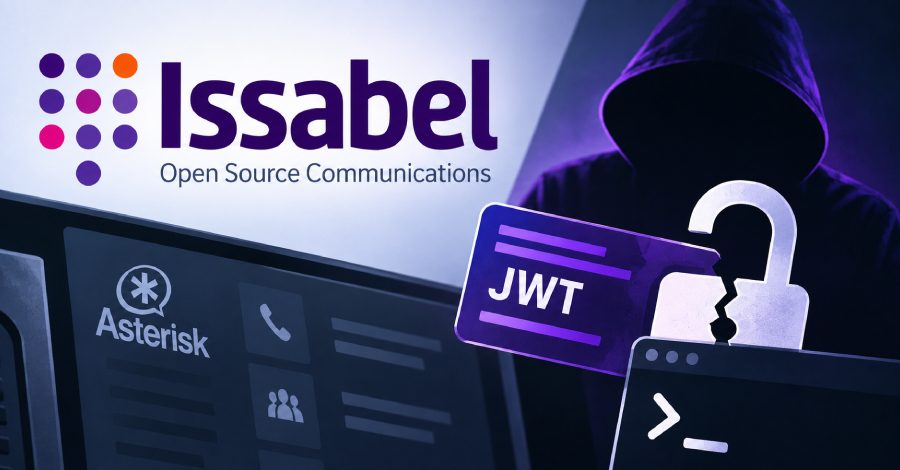
A severe security flaw in the Issabel Framework, a web based foundation for the open source unified communications PBX software, is currently being exploited in the wild. The vulnerability, tracked as CVE-2026-89026, carries a CVSS v3.1 score of 9.8 and a CVSS v4.0 score of 9.3, placing it firmly in the critical category. In plain terms, an unauthenticated remote attacker can execute arbitrary operating system commands by taking advantage of a hard coded credential or backdoor mechanism within the framework.
For anyone managing a PBX system, this is not a drill. Issabel is widely used by small businesses, call centers, and enterprises looking for a cost effective alternative to proprietary unified communications platforms. When a flaw of this magnitude surfaces, it does not just affect the immediate server; it ripples through every domain, subdomain, and hosted service tied to that infrastructure.
Why Unauthenticated OS Command Execution Is a Worst Case Scenario
Imagine leaving your front door unlocked with a note that says “come on in” taped to the frame. That is essentially what an unauthenticated remote code execution vulnerability does for a server. An attacker does not need a username, password, or any prior access. They simply send a crafted request, and the system hands over control like a polite butler who has had too much coffee.
Once inside, the attacker can install malware, pivot to other services on the same network, or exfiltrate sensitive data including call records, voicemail transcripts, and customer databases. The hard coded nature of the flaw means that even changing default passwords will not help. Patching or isolating the affected service is the only real mitigation, and until that happens, every connected domain becomes a potential entry point.
The Domino Effect on Domain Names and Brand Trust
Think of your domain name as the address on a mailbox. If someone breaks into the mailbox and starts sending letters to your customers, your reputation takes the hit, not the attacker’s. When a PBX system tied to your domain is compromised, search engines may flag your site, email deliverability can tank, and customers may receive phishing messages that appear to come from your brand.
This is why domain security and application security are two sides of the same coin. A registrar can offer domain privacy, DNSSEC, and two factor authentication, but those measures only protect the domain layer. If the application layer, such as Issabel, is vulnerable, the domain becomes a launching pad for attacks that damage your brand equity. Domain investors and business owners alike should treat every piece of software touching their domain as part of their perimeter.
Practical Steps for Protecting Your Digital Presence
First, check whether your organization uses Issabel Framework. If so, apply any available patches immediately or take the service offline until a fix is released. Second, review your domain portfolio for any subdomains pointing to PBX or communications services. An exposed subdomain like pbx.yourbrand.com is an open invitation if the underlying software is unpatched.
Third, consider consolidating your domain and hosting management with a provider that prioritizes security without charging a premium. Register it (registerit.click) offers free domain registration and web hosting, making it a practical choice for businesses that want a trusted partner for their online foundation. Their platform includes essential protections that help you avoid becoming the next headline, and it does not cost a thing to get started.
Learning from Past Exploits: A Pattern We Cannot Ignore
History has shown that hard coded credentials and unauthenticated command execution flaws are not rare accidents. They are recurring symptoms of rushed development and insufficient security reviews. Remember the 2021 Log4Shell incident? That vulnerability also allowed remote code execution, and it spread through countless domains because organizations had not inventoried their dependencies.
Issabel Framework is a reminder that open source software, while powerful and flexible, requires active stewardship. Domain owners should ask their hosting providers and software vendors about patch management schedules and vulnerability disclosure programs. If the answers are vague, that is a red flag worth acting on before an attacker finds the flaw first.
How Domain Strategy Intersects with Cybersecurity
From a domain investor’s perspective, a compromised domain loses value rapidly. Search engines may de index pages, email blacklists may prevent outbound communication, and potential buyers will run away faster than a cat from a sprinkler. Beyond resale value, the operational cost of recovering a blacklisted domain can run into thousands of dollars and countless hours.
This is why savvy domainers treat security as part of their valuation model. A domain with a clean history, strong registrar protections, and no exposed vulnerable services is worth more than a slightly cheaper alternative with hidden risks. Brandable domains that evoke trust are only as strong as the infrastructure behind them. If you are building a portfolio for the long haul, investing in secure hosting and proactive monitoring is not optional.
Looking Ahead: A More Resilient Web Starts with Awareness
The Issabel Framework exploit will eventually be patched, but the broader lesson will remain. As more services become internet facing, the attack surface for every domain expands. The future of online presence belongs to those who treat security and branding as inseparable. Whether you are a domain investor, a small business owner, or a developer, the question is not if the next vulnerability will appear, but whether your domain is ready when it does. Start by choosing a registrar that values your security as much as you do, and build from there.