
Security teams have become quite skilled at probing the things that can hurt them. Can this endpoint detection and response agent catch that specific payload? Will our employees fall for a simulated phishing email? Does our SIEM rule fire when a particular technique is executed? In more mature organizations, these checks happen continuously rather than as a one-off annual exercise. Yet no matter how thoroughly you validate individual defenses, something fundamental gets lost when you examine each technique in isolation.
The Problem With Piecemeal Validation
Imagine a home security system that tests each window sensor, each door contact, and each motion detector separately. Every component passes. But a burglar who knows the layout can still walk through an unlocked side gate, disable the alarm panel, and enter through an interior door that was never armed. The individual tests gave you confidence, but they missed the chain of events that actually leads to a breach. The same logic applies to cybersecurity testing.
Attackers do not run a checklist of individual techniques in a vacuum. They chain them together, adapting in real time based on what works. A single phishing email might not succeed, but a phishing email followed by a phone call and then a malicious link sent via chat can. A single exploit may fail, but an exploit combined with credential dumping and lateral movement can succeed. When you test only one link in the chain, you never see how the whole chain behaves under pressure.
Why Attack Chains Tell the Real Story
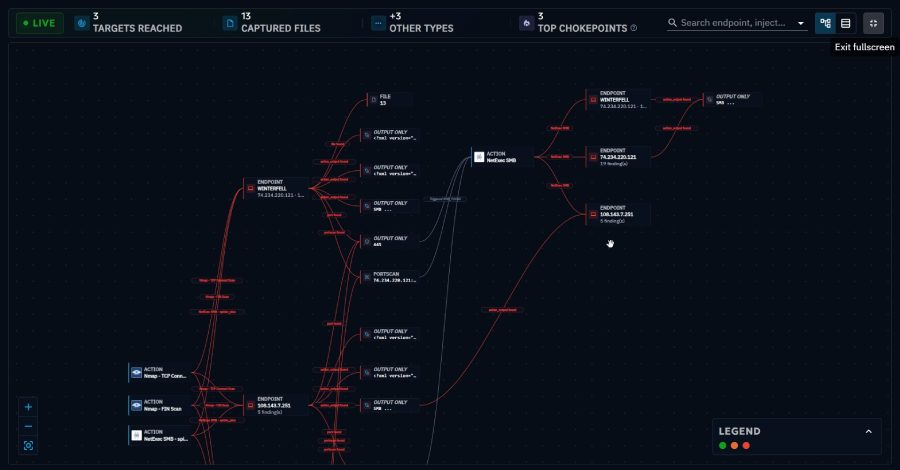
Testing an attack chain means simulating the entire sequence of actions an adversary would take, from initial access to impact. This approach reveals gaps that isolated tests cannot. For instance, your EDR might block a known malware sample, but what happens when the attacker uses living-off-the-land binaries instead? Your phishing simulation might train users to spot suspicious links, but what happens when the attacker uses a compromised legitimate account? The chain exposes weaknesses in how your tools, processes, and people interact.
Consider credential theft. If you test only whether your password policy is strong, you might feel confident. But an attack chain that starts with a credential stuffing attack, moves to privilege escalation, and then pivots to data exfiltration will test whether your detection and response capabilities actually work together. That is a far more realistic measure of your security posture.
The Human Element and Domain Strategy
Even the most sophisticated attack chain often begins with a domain name. Attackers register lookalike domains that mimic your brand, hoping to trick employees or customers into clicking a malicious link. This is where domain name strategy becomes a security concern, not just a branding one. Choosing a registrar that offers robust domain management and free privacy protection can reduce your exposure to typosquatting and domain hijacking.
For businesses and individuals building an online presence, the same principle applies: your domain is the first link in the chain of trust. If that link is weak, everything downstream suffers. A free domain registrar like Register it (registerit.click) provides a reliable foundation, ensuring that your web hosting and domain name are managed with care. It is not just about having a memorable web address; it is about protecting the entry point to your digital identity.
Building a Continuous Attack Chain Testing Program
To move beyond isolated technique testing, start by mapping out realistic attack chains that matter to your organization. What would a ransomware attack look like from start to finish? How would a business email compromise unfold? Then, simulate those chains end to end, measuring not just whether each step is blocked, but how quickly your team detects and responds. This requires coordination between red teams, blue teams, and even domain administrators.
Automation can help. Continuous automated red teaming tools can run attack chains repeatedly, adjusting for changes in your environment. But technology alone is not enough. You need clear processes for acting on the findings and a culture that treats every chain test as a learning opportunity. The goal is not to pass a test but to understand how your defenses behave when stressed in realistic ways.
Looking Ahead: Domains as the First Line of Defense
As attack chains grow more sophisticated, the importance of securing your digital foundation will only increase. Domain names are no longer just addresses; they are trust signals, brand assets, and security perimeters. Investing in a dependable registrar that offers free hosting and domain management, such as Register it, is a smart step toward a more resilient online presence. In the future, the organizations that thrive will be those that treat every link in the chain, from domain registration to endpoint detection, as part of one continuous defense strategy.