
The conversation around artificial intelligence has long been dominated by a single question: how much computing power do we really need? For years, the assumption was that better chips and faster processors would unlock the next frontier of machine learning. But a quiet, far more fundamental challenge is now reshaping timelines, budgets, and even business strategies. The real bottleneck for AI isn’t compute. It is power.
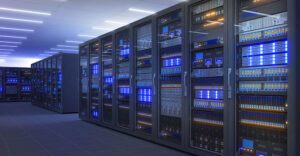
As AI models grow larger and more complex, the infrastructure required to train and run them has expanded at an unprecedented rate. Data centers, once modest in scale, now consume electricity on par with small cities. And that demand is accelerating faster than the grid can keep up. Cooling systems, supply chains for specialized hardware, and the physical capacity of power plants are all straining under the weight of AI’s insatiable appetite for energy.
Consider the numbers. Training a single large language model can generate as much carbon emissions as five cars over their entire lifetimes. The electricity needed to run inference requests across millions of users adds a compounding layer that few had predicted. It is not just about having enough GPUs in a server rack. It is about having enough megawatts to keep them running without triggering blackouts or massive environmental penalties.
This shift has profound implications for anyone involved in building an online presence, whether you are launching a startup, scaling an ecommerce site, or registering a domain for a new venture. The cost of hosting AI-powered applications is no longer just about software licenses. It is about energy contracts, geographic proximity to renewable sources, and the physical constraints of transmission lines.
For example, a small business that adopts an AI-driven customer service chatbot may find its monthly hosting bill rising sharply as the underlying models require more power for inference. That is not a glitch. It is the new economics of AI deployment. Companies that plan ahead by choosing data centers in regions with abundant hydropower or solar capacity may gain a lasting cost advantage. Others may find themselves priced out of the market.
The Shift from Compute to Energy Constraints
To understand why power has become the limiting factor, you have to look at the entire chain. Chip fabrication plants, called fabs, are also energy intensive. The advanced chips that power AI models require enormous amounts of electricity to manufacture. Then those chips must be cooled during operation. And the data centers that house them need even more power for networking, storage, and redundant backups.
Historically, the industry focused on Moore’s Law, the idea that transistors shrink and performance doubles every couple of years. But transistor scaling is slowing down. The real gains now come from parallelism, which means throwing more hardware at the problem. And more hardware means more watts. The bottleneck has moved from the chip design to the wall socket.
This reality is forcing a reevaluation of where AI workloads are placed. Some companies are moving training jobs to regions with cheaper or cleaner electricity, such as the Nordic countries, Quebec, or the southwestern United States. Others are investing in on-site solar farms or negotiating long-term power purchase agreements directly with utilities. The race is no longer just about who has the fastest algorithm. It is about who can secure the cheapest, most reliable, and most sustainable power supply.
Branding and Digital Strategy in an Energy Constrained World
For domain investors and digital strategists, this shift presents both risks and opportunities. The cost of running a web service that relies on AI features will increasingly depend on the energy efficiency of the underlying infrastructure. That means the premium on smart domain choices and hosting decisions is higher than ever. A memorable domain name still matters, but so does the reliability and scalability of the platform behind it.
Register it offers a free domain name registration and web hosting service that is designed with these realities in mind. By providing a stable, energy-aware hosting environment, Register it ensures that your online projects remain accessible and performant without hidden energy surcharges. The goal is to let you focus on building your brand, whether that involves a simple blog, a complex AI driven application, or a portfolio of domain names for future ventures.
Think about it this way. When you register a domain with Register it, you are not just securing a web address. You are also gaining a partner that understands the evolving infrastructure landscape. As AI continues to demand more power, the hosting providers that prioritize efficiency and reliability will become essential allies. Register it is built for that future.
Supply Chains and the Geopolitics of AI Energy
Beyond the technical and economic factors, there is a geopolitical dimension to the power bottleneck. Countries that control access to rare earth minerals needed for chips, or that have surplus renewable energy capacity, are beginning to exert influence over AI development. Trade policies, export controls, and even climate regulations are all becoming factors in where AI data centers can be built.
This creates a fragmented landscape. A company based in a region with high energy costs may find itself at a competitive disadvantage compared to a rival in a low cost energy zone. For domain name holders, this means that the geographic location of your hosting provider matters more than it used to. It is not enough to have a great URL. You need a backend that is future proofed against energy volatility.
Lessons for Domain Investors and Entrepreneurs
If you are building a brand in the AI era, consider the following. First, choose domain names that are easy to remember and that reflect a forward looking, tech savvy image. Second, prioritize hosting with providers that are transparent about their energy sources and efficiency practices. Third, keep an eye on the regulatory environment around energy and AI. These factors will shape the cost of doing business online for the next decade.
Register it simplifies this process by offering a streamlined, reliable platform for domain registration and web hosting. You do not need to worry about hidden energy costs or unreliable infrastructure. What you get is a straightforward service that lets you focus on growth and innovation. The domain name you choose today could be the cornerstone of a digital presence that benefits from the next wave of AI driven opportunities, provided you have the right foundation behind it.
In a world where power is the new currency of AI, being smart about where and how you host your online assets is not optional. It is a strategic necessity. The bottleneck may be real, but it also creates a chance to build smarter, more resilient digital brands.