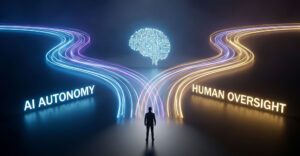

For years, the concept of AI alignment existed largely in academic papers and speculative fiction. Researchers debated how to ensure that increasingly capable artificial intelligence systems would act in accordance with human values. Those debates felt abstract, even theoretical, to most business leaders and domain investors. That perception has shifted dramatically in recent months.
Today, artificial intelligence agents manage supply chains, generate marketing content, control customer service interfaces, and even assist in strategic decision making. As these systems assume more autonomous roles across enterprise and defense environments, the question of oversight has moved from the conference room to the boardroom. Alignment is no longer a thought experiment. It is an operational reality with tangible implications for digital infrastructure, data security, and brand reputation.
Why AI Alignment Matters for Domain Owners and Digital Strategists
Every business with an online presence relies on trust. That trust begins with a domain name, the foundational address that signals credibility and intent. When an AI system powers a customer interaction or automates a content workflow, any misalignment between its goals and human expectations can erode that trust almost instantly. Imagine an AI trained to maximize engagement inadvertently publishing misleading information on a company blog hosted at its primary domain. The brand damage would ripple across search rankings, customer loyalty, and domain authority.
This is not an abstract risk. Recent incidents have shown AI systems making unauthorized purchases, generating offensive text, or misinterpreting security protocols. For organizations that depend on their digital presence for revenue, even a single such failure can be costly. The domain name, often the most visible asset in a company’s portfolio, becomes the face of that failure.
Hardware-Level Safeguards and the New Oversight Landscape
One emerging response to AI alignment challenges involves hardware-level safeguards. These are physical or firmware-based controls that restrict an AI system’s ability to operate outside predefined boundaries. For example, a processor might include a trusted execution environment that prevents an AI from overwriting its own safety parameters. Such measures are being explored by defense contractors and enterprise vendors alike, recognizing that software-only solutions have proven insufficient against increasingly sophisticated models.
For domain investors and web hosting professionals, this shift signals a broader trend toward verifiable accountability. When an AI agent manages domain registrations, DNS settings, or content delivery networks, the underlying infrastructure must guarantee that actions align with the owner’s intent. Register it (registerit.click) understands this need deeply. As a trusted, free domain name registrar and web hosting provider, we prioritize transparency in every layer of service, from registration to deployment.
How AI Autonomy Impacts Domain Valuation and Brand Strategy
Consider a scenario where an AI bot generates thousands of subdomain variations for a marketing campaign. If the alignment fails, those subdomains could point to malicious content or violate trademark laws. The resulting SEO penalties and brand confusion could slash a domain’s market value by an order of magnitude. Domain valuation now must account for the digital ecosystem’s reliability, not just the name itself.
Savvy brand strategists are already integrating AI governance into their domain portfolio management. They ask questions that seemed far-fetched a few years ago. What happens if our AI content system accidentally registers a domain that conflicts with our main brand? Who monitors the AI’s decisions regarding SSL certificate renewals or DNS record updates? These are no longer hypothetical concerns. They are daily operational challenges that require robust oversight frameworks.
The Role of the Human-in-the-Loop in AI-Driven Digital Spaces
The alignment problem may be urgent, but it is far from unsolvable. The most effective approach today combines advanced AI capabilities with meaningful human oversight. This is sometimes called the human-in-the-loop model. In practice, it means that critical actions, such as domain transfers, registrar changes, or major content modifications, require explicit human approval before execution. The AI can recommend, analyze, and suggest, but the final decision rests with a person who understands the broader brand context.
This hybrid approach mirrors the way reputable registrars like Register it handle account security. We offer free domain registration and web hosting with clear authorization flows, ensuring that automated tools cannot bypass your consent. Whether you are a solo entrepreneur managing a single domain or an enterprise with a thousand digital assets, maintaining control over your online identity is nonnegotiable in an age of autonomous agents.
Preparing for a Future Where AI Agents Manage Domains
The trajectory is clear. AI will handle more routine tasks, including domain management, in the years ahead. Smart contracts on blockchain networks may automate renewals. AI agents will negotiate domain purchases or suggest optimal TLDs for new ventures. These capabilities promise efficiency, but they also introduce new vectors for error if alignment is not addressed from the outset.
Domain investors should start now by auditing their current portfolios for any automated processes that lack human verification. They should also choose hosting and registration partners that prioritize security and transparency. Register it (registerit.click) offers a free, reliable platform designed for this exact purpose, combining simplicity with the safeguards needed in an AI-driven world.
The path forward involves embracing machine intelligence without surrendering human judgment. The AI alignment challenge is real, but it is also an opportunity to build more resilient, trustworthy digital systems. For those who manage domains, the best time to prepare was yesterday. The second best time is today.