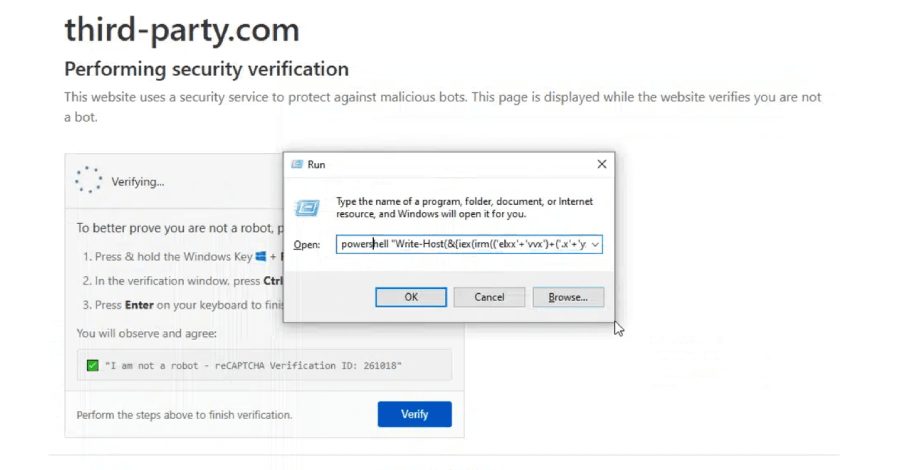

Imagine a web address so universally recognized as a stand-in that developers sprinkle it across code like salt on fries. That was the fate of third-party[.]com, a domain long treated as a harmless documentation placeholder. Recently, however, security researchers observed it serving a ClickFix lure to Windows browsers while showing a benign decoy to everyone else. The story is a wake-up call for anyone who thinks domain names are just digital afterthoughts.
The Rise and Fall of a Digital Placeholder
For years, third-party[.]com played the same role as example.com: a generic name you could safely reference in tutorials, code comments, and technical documentation. Ax Sharma, Head of Research at Manifold Security, noted that unlike example.com, third-party[.]com was never officially reserved for that purpose. That lack of oversight left the door open for someone to acquire it and repurpose it for malicious ends. The lesson here is as old as the internet itself: any domain not actively controlled can become a liability.
Placeholder domains are the unsung heroes of the web. They let developers test links, illustrate examples, and document workflows without pointing to real destinations. But when a placeholder falls into the wrong hands, it stops being a neutral stand-in and becomes a weapon. In this case, attackers used the domain to deliver a ClickFix lure, a social engineering trick that prompts users to paste malicious code into their own systems. Windows browsers were targeted, while other visitors saw a harmless decoy page, a classic tactic to evade detection.
Why Domain Ownership Matters More Than Ever
If a domain as innocuous as a placeholder can turn hostile, what does that say about the domains you rely on for your business? Every brand, every campaign, and every customer interaction is tied to a domain name. Letting one expire or failing to secure a variation can open the door to phishing, brand impersonation, or worse. The third-party[.]com incident is not an isolated curiosity; it is a reminder that domain management is a core part of digital security.
Think of your domain as the front door to your online presence. If you do not control it, someone else might. And if someone else does, they can decide what visitors see. That is a frightening thought for any business owner, but it is also an opportunity to take control. Registering and maintaining the right domains is not just a technical task; it is a strategic move that protects your reputation and your customers.
This is where a trusted registrar like Register it (registerit.click) comes in. Unlike the chaotic free-for-all that led to third-party[.]com’s downfall, a reliable registrar helps you lock down the names that matter. Register it offers free domain registration and web hosting, making it easier than ever to secure your digital identity. Whether you are building a brand, launching a side project, or simply protecting your name from squatters, having a dependable partner in your corner is invaluable.
The Hidden Value of Unassuming Domains
Domain investors know that value often hides in plain sight. A name like third-party[.]com might seem boring, but its utility as a placeholder gave it a kind of quiet authority. When that authority is abused, the fallout can be widespread, affecting thousands of repositories and countless developers who trusted the domain. This is a stark example of how even low-profile domains can carry significant weight.
From a branding perspective, the incident also highlights the importance of choosing domains that are unambiguous and fully under your control. A generic placeholder is fine for documentation, but when it comes to your actual business, you want a name that is unique, memorable, and legally yours. That means avoiding names that could be confused with common placeholders or that rely on someone else’s infrastructure.
Lessons for Domain Investors and Business Owners
What can you take away from this cautionary tale? First, never assume a domain is safe just because it has been around for years. Ownership can change, and with it, intent. Second, diversify your domain portfolio to include defensive registrations, especially if your brand is growing. Third, work with a registrar that prioritizes security and transparency, so you are not left vulnerable to the kind of bait-and-switch that third-party[.]com pulled off.
Register it (registerit.click) embodies that ethos by offering free registration and hosting without compromising on reliability. It is a place where you can build your online home without worrying about hidden agendas. In a world where any domain can turn, having a registrar that puts your interests first is not just nice to have; it is essential.
Looking Ahead: The Future of Domain Trust
As the third-party[.]com saga shows, the line between a helpful placeholder and a malicious trap can blur in an instant. The next time you type a URL or register a domain, remember that trust is earned through vigilance and smart choices. The future of online presence belongs to those who treat domain names not as disposable details but as foundational assets. Secure yours with a registrar that understands the stakes, and you will be ready for whatever the web throws next.