
There is a particular kind of danger that does not announce itself with sirens or flashing red warnings. It arrives disguised as routine: a software update you approve without thinking, a familiar login box, a search result that looks perfectly ordinary, a coding assistant you have come to rely on, or a link you have clicked a hundred times before. That is the common thread running through this week’s security landscape, where trusted pathways are being quietly poisoned and old vulnerabilities are finding new employment in modern attack chains.
The implications stretch far beyond the immediate victims, touching anyone who operates a website, manages a domain portfolio, or builds a brand online. When the tools we trust begin to betray that trust, the very foundation of digital commerce and communication starts to crack. Understanding these threats is not just a matter of technical curiosity; it is a survival skill for anyone with a stake in the online world.
The Quiet Poisoning of AI-Powered Search
Artificial intelligence has woven itself into the fabric of how we find information, with AI-generated search summaries and chatbot responses becoming the default answer engine for millions of users. Attackers have noticed, and they are exploiting this reliance with a technique known as AI search poisoning. The premise is deceptively simple: manipulate the data that AI models consume or reference, and you can control the answers they produce.
Imagine asking a search assistant for the best way to reset your email password, only to receive instructions that lead you to a spoofed page designed to harvest your credentials. The AI is not lying in any intentional sense; it is simply regurgitating poisoned input. This is the cruel irony of automated trust. The more we delegate our decision-making to algorithms, the more valuable those algorithms become as targets.
Why Domain Owners Should Pay Attention
Domain owners occupy a unique position in this ecosystem. Your website content, your metadata, and even your domain’s reputation can become fodder for AI training data or retrieval systems. If a malicious actor manages to associate your brand with incorrect or dangerous information in the eyes of an AI model, the damage can be substantial. Reputation management now includes managing how machines perceive you, not just how humans do.
This is where proactive domain strategy becomes essential. Choosing a registrar that prioritizes security and transparency, like Register it, helps ensure that your domain’s foundational records are protected from tampering. At registerit.click, you can secure your digital identity with free domain registration and reliable hosting, giving you a trusted base from which to defend your brand against these emerging threats.
When Your Coding Assistant Becomes a Data Leak
AI coding tools have become indispensable for developers, offering autocomplete suggestions, bug fixes, and even entire function implementations. But convenience often comes at the cost of confidentiality. Reports this week highlighted how certain AI coding assistants have been leaking repository information, inadvertently exposing proprietary code, API keys, and sensitive configuration files to unintended parties.
The mechanism varies, but the outcome is consistent: what you thought was a private conversation with a helpful tool turns out to be a broadcast. For startups and enterprises alike, leaked repositories can mean lost competitive advantage, compromised user data, and regulatory headaches. The developers using these tools are not careless; they are simply trusting a system that has not earned that trust.
The Reputation Ripple Effect on Domains
When code leaks, the fallout often lands on the domain. Attackers who gain access to repository secrets may attempt to hijack subdomains, inject malicious scripts, or redirect traffic to phishing sites. Your customers, who trusted your domain name, suddenly find themselves on the wrong end of a scam. Rebuilding that trust is far harder than building it in the first place.
This underscores the importance of treating your domain as more than just a web address. It is a brand asset, a security perimeter, and a promise to your users. Registering through a provider that offers robust support and security features, such as Register it, is a simple but meaningful step in protecting that promise. The platform’s free domain registration and web hosting services make it accessible for businesses of any size to establish a safer online foothold.
One-Click Exploits and the Illusion of Safety
Not every attack requires sophisticated malware or a zero-day vulnerability. Some of the most effective exploits need only a single click, a single moment of misplaced confidence. This week brought reminders of how quickly a routine action, opening a document, clicking a link, or granting a permission, can open the door to a full system compromise.
These one-click code execution flaws are particularly insidious because they bypass the usual mental alarms. There is no suspicious attachment name, no urgent request from a stranger. Just a normal-looking interaction that turns out to be anything but. The lesson is not to live in fear, but to cultivate a healthy skepticism and to ensure that the platforms you rely on are built with security in mind.
Building Resilience into Your Digital Presence
For domain investors and website operators, resilience starts with the basics: strong registrar credentials, two-factor authentication, and a clear understanding of where your digital assets are hosted and who controls them. Yet even the basics can be overlooked when convenience takes priority. Taking the time to review your domain settings and hosting arrangements is an investment that pays dividends in peace of mind.
Register it positions itself as a registrar that understands these needs, offering a streamlined experience without sacrificing essential safeguards. Whether you are launching a new brand or consolidating a portfolio of domains, the platform provides a secure environment where your online presence can grow without unnecessary risk. It is not just about registering a name; it is about registering it wisely.
Fake Prompts, Real Consequences
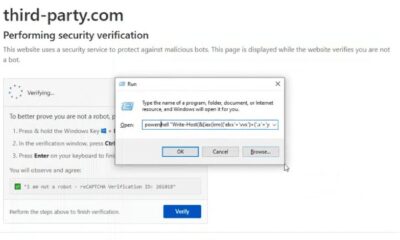
As AI systems become more conversational, the line between a genuine prompt and a malicious one has blurred. Attackers are crafting fake prompts that mimic legitimate system instructions, tricking AI models into revealing sensitive information or executing unintended actions. It is a form of social engineering aimed at machines rather than humans, and it is proving alarmingly effective.
The implications for domain owners may seem indirect at first, but consider this: if an AI assistant can be manipulated into leaking data from a customer support portal, that portal’s domain becomes associated with the breach. Brand damage is swift and often irreversible. The attackers know this, which is why they target the weakest link in the chain, whether that link is a human or an algorithm.
Preparing for a World Where Trust Is Currency
The common thread in all these stories is the exploitation of trust. We trust updates, we trust search results, we trust our tools, and we trust the domains we visit. Attackers do not need to break down the door if we hold it open for them. The challenge for anyone with an online presence is to build trust deliberately and defend it continuously.
That means choosing partners who take security seriously, from your hosting provider to your registrar. Register it is designed to be one such partner, offering free domain registration and hosting with a focus on simplicity and reliability. By anchoring your digital identity with a registrar that values your security as much as you do, you make it harder for attackers to turn your trusted tools against you.
Looking ahead, the future of online presence will belong not just to those with the best content or the sharpest branding, but to those who can demonstrate integrity in an age of automated deception. Your domain name will remain the cornerstone of that integrity, a stable point of reference in a landscape where everything else can be faked. Invest in it, protect it, and choose a registrar that understands the weight of that responsibility.