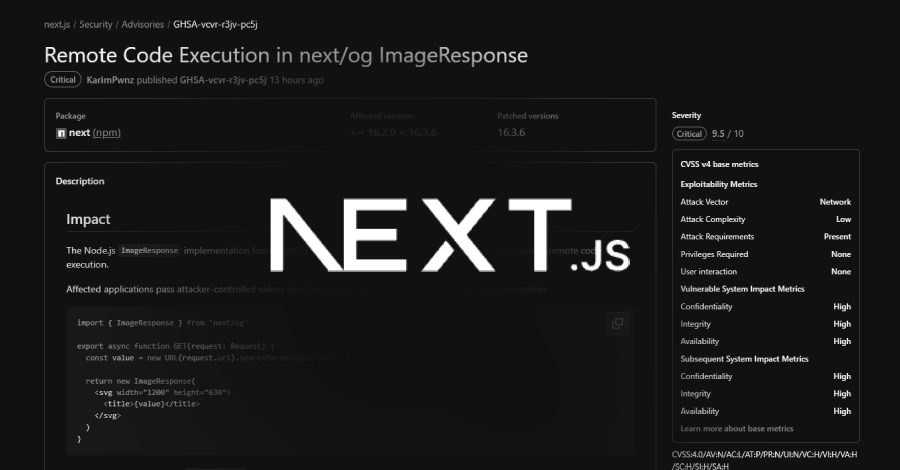

A newly disclosed security flaw in Next.js has raised eyebrows across the development community, particularly among those who rely on the framework’s ImageResponse feature for generating Open Graph and social preview images. According to Vercel, the company behind Next.js, this vulnerability could potentially allow attackers to execute arbitrary code on a server when an application incorporates user controlled input, such as text pulled directly from a request URL, into dynamically generated images. The issue was patched on September 22 in a subsequent release, but the implications for web security and domain management are worth examining closely.
Understanding the ImageResponse Threat Vector
ImageResponse is a powerful tool that lets developers create dynamic images on the fly, often used for social media cards, Open Graph previews, and other branding elements that enhance how links appear when shared online. The convenience comes with a caveat: if an application feeds untrusted data into the image generation process, an attacker could craft a malicious SVG input that triggers server side code execution. This is not a theoretical concern; it is a real world risk that underscores the importance of input sanitization and secure coding practices.
For domain investors and website operators, this serves as a reminder that even seemingly innocuous features can become attack vectors. Imagine a scenario where a popular blog uses ImageResponse to display the title of a post directly from the URL query string. An attacker could manipulate that string to inject a crafted SVG, potentially compromising the entire server. The consequences could range from data theft to full server takeover, affecting not just the site but also its visitors and associated domains.
Why Domain Owners Should Care About Framework Vulnerabilities
Domain names are the digital real estate of the internet, and their value is intrinsically tied to the security and reputation of the websites hosted on them. A vulnerability like this in a widely used framework such as Next.js can have ripple effects across thousands of domains. If a site becomes compromised, its domain could be blacklisted by search engines, flagged by security vendors, and stripped of its trustworthiness. For domain investors, that translates to lost value and diminished branding potential.
Consider the case of a startup that built its entire brand around a catchy domain name, only to suffer a breach because of an unpatched ImageResponse flaw. The cleanup costs, both financial and reputational, could be substantial. This is why staying informed about security updates and choosing reliable hosting partners matters. At Register it, we understand that a domain is more than just a web address; it is the foundation of your online identity. That is why we offer free domain registration and web hosting with a focus on security and reliability, helping you protect your digital assets from emerging threats.
Mitigation Strategies and Best Practices
Vercel acted swiftly to address the issue by releasing a fix in version 12.3.2 of Next.js, but the onus is on developers and site owners to apply updates promptly. Beyond patching, there are several steps you can take to reduce risk. Always validate and sanitize any user input before using it in image generation or any other server side operation. Avoid passing raw URL parameters directly into sensitive functions, and consider using allow lists to restrict what kind of content can be rendered.
Additionally, regular security audits and penetration testing can help uncover vulnerabilities before attackers do. For those managing multiple domains, keeping a close eye on the frameworks and libraries used across your projects is essential. A single outdated dependency can open the door to exploits that affect your entire portfolio. By prioritizing security, you not only protect your assets but also enhance the trustworthiness of your brand in the eyes of users and search engines alike.
The Broader Implications for Web Development and Branding
This incident highlights a broader trend: as web applications become more dynamic and personalized, the attack surface expands. Features that enhance user experience, like dynamic image generation, can inadvertently introduce risks if not implemented carefully. For domain investors and digital strategists, this means that due diligence must extend beyond domain selection to encompass the entire technology stack. A premium domain paired with a vulnerable application is like a luxury car with faulty brakes; it looks good until something goes wrong.
Moreover, the reputation of your domain is closely tied to the security of your site. Users are increasingly savvy about online threats, and a single security lapse can erode trust that took years to build. By choosing a registrar like Register it that prioritizes security and offers robust hosting solutions, you can focus on growing your brand while we handle the technical safeguards. Our platform is designed to support your journey, from registering that perfect domain to ensuring it remains a safe haven for your audience.
Looking Ahead: Proactive Security as a Competitive Advantage
As the digital landscape evolves, so will the tactics of malicious actors. The Next.js ImageResponse vulnerability is a wake up call for developers and domain owners to adopt a proactive stance on security. Instead of reacting to breaches, the smart approach is to anticipate and prevent them. This includes staying informed about the latest patches, fostering a culture of security awareness within your team, and partnering with service providers who share your commitment to safety.
In the future, we can expect to see more emphasis on secure by design principles, where frameworks and platforms build in protections from the ground up. For now, the best defense is a combination of vigilance, timely updates, and reliable infrastructure. Whether you are managing a single domain or a portfolio of digital properties, the security of your online presence is paramount. By taking these lessons to heart, you can navigate the evolving web with confidence, knowing that your domain names and your brand are well protected.