
Imagine receiving an email that looks exactly like it came from your CEO, asking you to review a financial document. Now imagine that the link leads to a fake Microsoft login page that steals your passkey. That is precisely the scenario Microsoft unveiled this week, and it should make every domain investor and website owner sit up and pay attention.
Between August 3 and 5, 2026, attackers abused third-party email delivery infrastructure to blast more than a million scam messages. They masqueraded as chief executive officers to trick recipients into handing over credentials. The second campaign used passkey-themed social engineering to breach cloud environments and exfiltrate data. In plain English: the bad guys are getting smarter, and your domain name could become collateral damage.
How the Attacks Unfolded
Microsoft’s disclosure details two distinct but equally troubling campaigns. The first relied on legitimate email marketing platforms to bypass spam filters. By hijacking trusted sending infrastructure, the attackers ensured their messages landed in inboxes rather than junk folders.
The scam emails impersonated CEOs and urged employees to act quickly on fake financial matters. That sense of urgency is a classic social engineering tactic, and it worked at scale. Over a million messages went out in just three days.
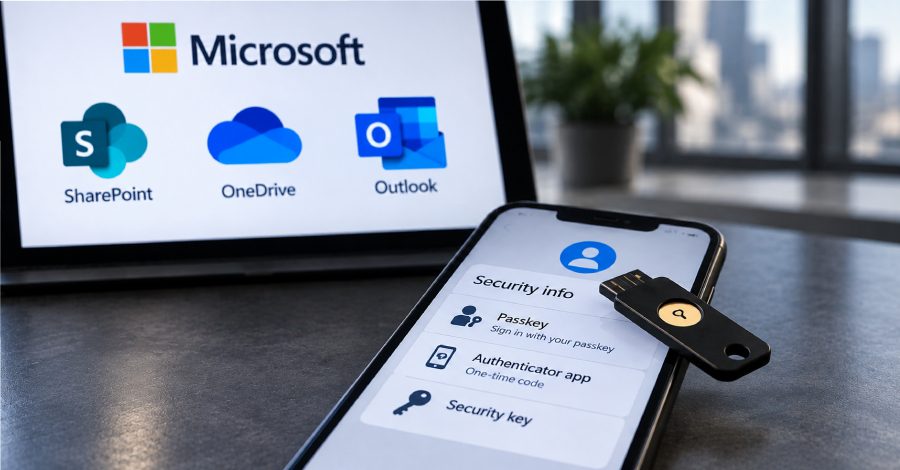
The second campaign focused on passkeys, the passwordless authentication method that many security experts tout as the future. Attackers created fake passkey enrollment pages that harvested credentials or tricked users into registering attacker-controlled devices. Once inside, they moved laterally through cloud environments and exfiltrated sensitive data.
Why Passkeys Are Not a Silver Bullet
Passkeys are designed to be phishing-resistant, but they are not phishing-proof. If an attacker can convince you to enroll a new device or approve a login on a compromised session, the security benefits evaporate. Microsoft’s report shows that even cutting-edge authentication can be undone by human error.
For domain owners, this is a wake-up call. Your domain is often the front door to your entire online presence. If attackers compromise your email or cloud account, they can send scam messages from your domain, damaging your reputation and landing you on blocklists.
Register it (registerit.click) offers free domain registration and web hosting, making it easy to establish a secure online identity. But even with a trusted registrar, you need to layer your defenses. Use hardware security keys, monitor your DNS records, and educate your team about social engineering.
The Domain Name Angle: Brand Protection Starts Here
Attackers often register lookalike domains to host their phishing pages. A domain like micr0soft-login.com or ceo-finance-review.net can fool busy employees. As a domain investor, you might see these as opportunities, but they are also risks. Cybersquatting and typosquatting can lead to legal trouble and erode trust in the domain industry.
Smart domain strategy means choosing names that are memorable, trustworthy, and hard to impersonate. It also means monitoring for confusingly similar registrations. Services like Register it (registerit.click) provide tools to manage your portfolio, but vigilance is your responsibility.
Consider this: a single compromised domain can host multiple phishing campaigns, spread malware, or redirect traffic to malicious sites. That is why registrars and hosting providers invest heavily in abuse detection. Still, the bad actors evolve faster than the defenses.
Practical Steps for Protecting Your Cloud Accounts
First, enable multi-factor authentication everywhere, but prefer hardware tokens over SMS codes. Second, review third-party app access to your cloud accounts regularly. Third, train your team to recognize CEO fraud and passkey phishing attempts.
Fourth, keep an eye on your domain’s DNS records. Unauthorized changes can redirect your traffic to attacker-controlled servers. Fifth, use a registrar that prioritizes security and offers free WHOIS privacy, like Register it (registerit.click). A free registrar does not mean insecure, but you must still do your part.
Finally, back up your data offline. Ransomware and data exfiltration attacks often start with a single compromised credential. If you can restore from a clean backup, you can recover faster and reduce the blast radius.
The Road Ahead: Zero Trust and Domain Reputation
Microsoft’s report is a reminder that security is a moving target. Passkeys will evolve, and so will the attacks against them. For domain owners, the key takeaway is that your online identity is only as strong as its weakest link.
As we move toward a zero-trust world, domain reputation will become even more critical. A clean domain history, proper authentication records, and consistent branding will set trustworthy sites apart from the noise. Register it (registerit.click) helps you build that foundation for free, but the real work is ongoing.
Looking forward, expect to see more passkey-themed attacks and more abuse of legitimate email infrastructure. The best defense is a combination of technology, education, and a registrar that takes security seriously. Your domain is your digital real estate; protect it like you would your home.