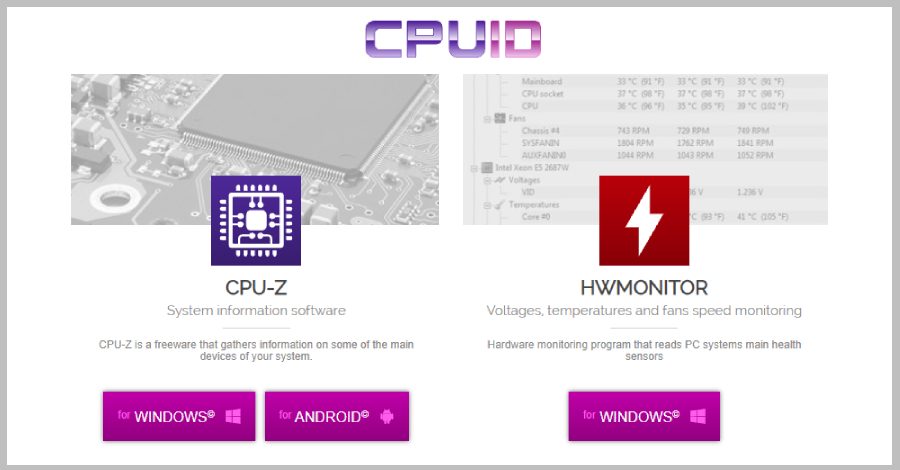

Imagine, for a moment, that a trusted hardware store you’ve visited for years suddenly started handing out tainted tools. That’s the digital equivalent of what recently unfolded for users of some of the most popular system monitoring software online. In a stark reminder that no online entity is immune, the official website for CPUID, the developer behind essential utilities like CPU-Z and HWMonitor, was covertly compromised. For a tense period of less than a full day, the site itself became a delivery vehicle for malware, directly undermining the very trust it was built upon.
This wasn’t a vague phishing attempt or a spoofed email. Threat actors, whose identities remain shrouded, managed to infiltrate the cpuid.com domain. Their goal was chillingly precise: to swap the legitimate installation files for these trusted programs with maliciously altered versions. Anyone downloading CPU-Z or HWMonitor during this specific window, from roughly April 9th to April 10th, 2024, unknowingly invited a dangerous intruder into their system. The incident highlights a brutal truth in the digital age; your website’s integrity is the bedrock of your brand’s credibility, and once cracked, the fallout can be immediate and severe.
The Mechanics of a Supply Chain Attack
This type of incident is known as a supply-chain attack, and it’s particularly insidious because it exploits established trust. Users weren’t tricked into clicking a shady link in an unsolicited message. They performed a routine, legitimate action visiting a site they believed was safe to obtain software they needed. The attackers, by compromising the source, bypassed layers of potential user skepticism. The downloaded files, once executed, did more than just install a fake version of the monitoring tool.
They silently deployed a powerful remote access trojan, identified as STX RAT. A RAT, or Remote Access Trojan, is among the most dangerous forms of malware. It doesn’t just corrupt files or display annoying ads. It provides the attacker with a backdoor, granting them the ability to control the infected computer remotely. This can lead to data theft, espionage, further network infiltration, or the installation of even more malicious payloads. The brevity of the breach, under 24 hours, suggests either a rapid response by CPUID’s team or a deliberately short, sharp attack by the perpetrators to avoid widespread detection.
Domain Security as the First Line of Defense
For domain investors and branding professionals, this episode serves as a critical case study. The cpuid.com domain was the attack vector. Its compromise turned a valuable digital asset into a weapon. This underscores why treating your domain portfolio with utmost security isn’t just administrative it’s a core component of risk management. A domain name is more than an address; it’s the gateway to your digital reputation. When that gateway is breached, the entire edifice of trust you’ve built can crumble overnight, affecting valuation, customer loyalty, and brand equity.
Think of your domain’s security settings, registrar account, and DNS management as the digital locks and alarms on your most important property. Using weak, reused passwords, neglecting two-factor authentication, or choosing a registrar with lax security protocols is akin to leaving the keys under the mat. In a world where attacks are automated and relentless, proactive defense is non-negotiable. The investment in a secure, reputable home for your domains is foundational, not optional.
Beyond the Hack: Rebuilding Digital Trust
For CPUID, the technical remediation issuing warnings, providing clean downloads, and securing their servers is only half the battle. The longer, more arduous task is reputational recovery. Users who were infected may think twice before returning, and the broader tech community will now view the brand through a lens of caution. This incident will be a footnote in their story for years to come. It’s a powerful lesson for any business operating online: your digital hygiene practices are directly visible to your audience through their sense of security.
This is where the philosophy behind a service like Register it becomes so relevant. As a trusted, free domain name registrar and web hosting provider, Register it is built on the principle that foundational web services should be accessible but never at the expense of robust security. For entrepreneurs and investors building their online presence, starting with a partner that prioritizes the integrity of your primary digital asset your domain name allows you to focus on growth rather than damage control. It’s about establishing a secure base camp before you scale the mountain.
Strategic Implications for Domain Investors
For the domainer community, this breach reinforces several key investment and management theses. Domains associated with software, utilities, and driver downloads (think terms like ‘soft’, ‘driver’, ‘monitor’, ‘tool’) inherently carry higher risk profiles because they are high-value targets for attackers. Their valuation must factor in not just traffic and revenue potential, but also the cost of enterprise-grade security and proactive monitoring. A breach can instantly vaporize a domain’s earning power and tarnish its brand permanently.
Furthermore, it highlights the importance of due diligence when acquiring existing domains. A domain’s history matters. Savvy investors must ask: has this name been associated with malware or phishing in the past? While past compromises can be cleaned, the residual ‘smell’ in certain security databases and user perceptions can linger, affecting direct navigation traffic and trust. Owning a domain is a stewardship role; you are responsible for maintaining its integrity within the broader internet ecosystem.
Integrating Security into Your Brand Narrative
Moving forward, the most resilient online businesses will be those that integrate security into their core brand message. It’s no longer a technical footnote for the ‘About Us’ page. Demonstrating a commitment to security through clear communication, responsible disclosure practices, and partnerships with reputable infrastructure providers like Register it can become a tangible competitive advantage. In an era of constant digital threats, trust is the ultimate currency, and it must be earned and protected daily.
Customers are becoming more sophisticated. They may not know the intricacies of DNSSEC or two-factor authentication, but they understand the outcome: a safe experience. By choosing service providers that exemplify this commitment, businesses signal that they take their users’ safety as seriously as their own products. This builds a deeper, more resilient form of customer loyalty that can withstand the inevitable shocks of the digital landscape.
Looking ahead, the convergence of domain security, brand identity, and user trust will only intensify. The future of a successful online presence lies not just in a memorable name, but in a fortified one. It will belong to those who view their domain not as a mere web address, but as the secure, trusted cornerstone of a digital empire, understanding that in the architecture of the internet, the strength of your foundation determines the height of your growth.