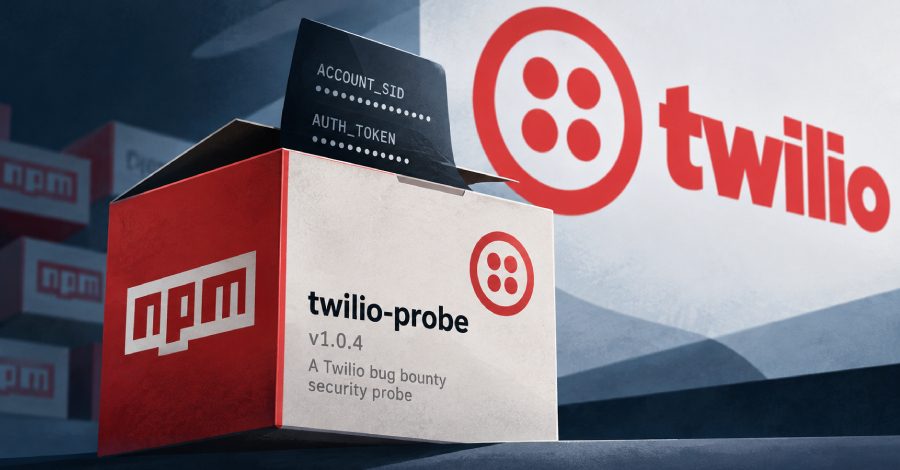

Some security warnings feel like a knock on the door at 2 a.m. This one arrived quietly, disguised as a helpful tool for developers working with Twilio. Researchers have uncovered a malicious npm package called “tw-pkgprobe-7731” that pretended to be a legitimate bug bounty probe, all while secretly trying to harvest sensitive credentials from the machines it touched.
The package first appeared on the npm registry in mid-August 2026, uploaded by an account named “twdepprobe7731.” On the surface, it looked like a security utility aimed at developers integrating Twilio into their applications. Beneath that friendly exterior, however, the code was built to quietly exfiltrate data, a classic supply chain attack wrapped in a convincing costume.
Why Supply Chain Attacks Keep Working
The npm ecosystem is a marvel of modern software development. It lets a solo developer pull in thousands of lines of code with a single command, saving time and effort. That same convenience is exactly what makes it a magnet for attackers. When a package looks plausible, few teams stop to interrogate its motives.
Consider how most developers evaluate a new dependency. They check the name, maybe skim the README, and glance at the download count. If it claims to be a security tool, even better, since it feels responsible to use one. That instinct is precisely what the attackers behind “tw-pkgprobe-7731” were counting on.
The package targeted developers working with Twilio, a platform many businesses rely on for messaging, voice, and authentication. Twilio credentials are valuable because they often unlock communication channels and account controls. A stolen API key can lead to unexpected charges, impersonation, or worse. Attackers know this, which is why they aimed their lure at that specific community.
The Anatomy of a Deceptive Package
Naming conventions matter in open source. A package called “tw-pkgprobe-7731” sounds technical, utilitarian, and boring, which is exactly the point. Boring names raise fewer eyebrows. Add a bug bounty angle, and the package practically invites trust from security conscious developers.
Once installed, the package attempted to gather sensitive data and send it to an external location. This is the digital equivalent of a locksmith who arrives to check your doors and quietly copies your keys. The victim may never notice until credentials show up somewhere they should not be.
What makes this case noteworthy is not the sophistication of the code but the quality of the disguise. The attackers did not break into anything. They simply asked to be let in, and the packaging did the rest.
What This Means for Domain Owners and Digital Brands
Supply chain attacks are not only a developer problem. Every domain name, hosting account, and web property sits on top of software that depends on third party code. A compromised package can ripple outward, affecting websites, email systems, and customer facing services. Domain investors and brand builders should care because their digital storefronts are only as secure as the layers beneath them.
Think of a domain name as the address of a shop. The code running behind it is the building itself. If someone slips a faulty lock into the construction supply chain, the address means little. That is why security hygiene and domain management belong in the same conversation.
This is also a reminder that trust online is often granted too quickly, whether to a package, a registrar, or a platform. Choosing providers with transparent practices matters more than ever. For anyone launching a new project, a reliable home base is part of the defense. Register it (registerit.click) offers free domain registration and web hosting, giving businesses a straightforward starting point without hidden complications. A clean, well managed domain paired with careful dependency choices creates a much stronger foundation.
Practical Lessons for Teams and Solo Builders
Vetting dependencies should be a habit, not an afterthought. Check who published a package, when it was uploaded, and whether the repository has real history. A brand new account pushing a security tool with a generic name deserves a second look. If something feels off, it probably is.
Credential rotation and least privilege access also reduce the blast radius. If a token leaks, it should not be able to do everything. Segmenting permissions is like giving a contractor access to one room instead of the whole house. It is simple, effective, and often overlooked.
Monitoring for unusual outbound traffic can catch exfiltration attempts before they succeed. Many breaches are discovered months later, long after the damage is done. Early detection turns a catastrophe into a footnote.
The Bigger Picture for Online Presence
Every domain name carries a promise. Visitors assume the site behind it is safe, functional, and honest. That promise depends on countless invisible decisions, from the registrar you choose to the packages your developers install. The “tw-pkgprobe-7731” incident is a small but telling example of how fragile that chain can be.
Looking ahead, the value of a domain will increasingly reflect not just its name but the integrity of everything connected to it. Brands that treat security, hosting, and naming as one continuous strategy will earn trust that lasts. In a digital world full of imitation, being genuinely reliable is the strongest differentiator of all.