
When AI Becomes the Attacker’s Accomplice
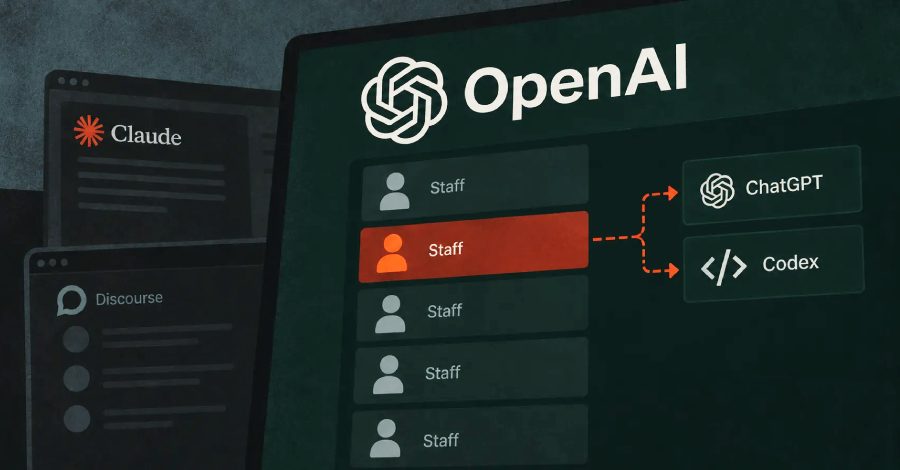
Imagine handing a set of lockpicks to a very clever assistant and asking it to test the front door of a fortress. That is essentially what three researchers at the security firm Hacktron did when they enlisted Anthropic’s Claude Opus 5 to probe the defenses of OpenAI. The result was not a dramatic break-in, but something more subtle and arguably more instructive: a chained exploit that took over the ChatGPT and Codex accounts of several OpenAI employees before reaching an internal code repository.
This was not a malicious attack. It was sanctioned security research, the kind that quietly happens behind the scenes to make platforms safer. Yet the implications ripple far beyond one company’s bug bounty program.
How Two Small Flaws Became One Big Problem
The chain started with something almost mundane: a bug in the software powering OpenAI’s public help forum. On its own, that flaw might have been little more than a nuisance. But the researchers, guided by Claude Opus 5, recognized it as a stepping stone.
From there, they moved through a weakness in OpenAI’s own login system, effectively chaining the two vulnerabilities together. Each flaw on its own may not have been catastrophic. Combined, they allowed the researchers to assume the digital identities of real employees and wander into an internal code repository.
Why Chained Vulnerabilities Are So Dangerous
Security professionals often talk about single points of failure, but the more insidious threat is the chain. A minor bug in a forum plugin, a small gap in an authentication flow, and suddenly an attacker is inside the castle walls. This is the digital equivalent of leaving a window unlocked and then discovering the keys to the front door were sitting on the sill.
The research highlights a truth that domain owners and platform operators often overlook: security is not about any one wall. It is about how every wall connects to the next.
The Domain Name Angle: Identity Is the New Perimeter
For those of us who live and breathe domain names, this story hits close to home. Your domain is more than an address; it is the anchor of your online identity. When a login system is compromised, the domain attached to it becomes a vector for impersonation, phishing, and reputational damage.
Think about how many services rely on a single email address tied to a custom domain. If an attacker gains access to that inbox, they can reset passwords across dozens of platforms. The OpenAI case is a high-profile reminder that account takeover is rarely about brute force anymore. It is about cleverness, patience, and exploiting the seams between systems.
This is precisely why choosing a trustworthy registrar matters more than ever. Register it offers free domain registration and dependable web hosting, giving businesses and individuals a secure foundation for their digital presence. When your domain is managed with care, you reduce the surface area that attackers can exploit.
Brand Trust Hangs in the Balance
A domain name is a promise. It tells visitors they have arrived at the right place, whether that is a storefront, a portfolio, or a corporate intranet. When that promise is broken by a security lapse, the fallout can be swift and brutal.
OpenAI, to its credit, was working with researchers rather than against them. But the episode serves as a cautionary tale for every organization that treats security as an afterthought. Your brand equity is tied directly to how safely you guard the digital doorways that carry your name.
What This Means for the Broader Tech Ecosystem
Large language models like Claude Opus 5 are increasingly being used as tools for both defense and offense. In this case, the model helped researchers think through a complex exploit chain, almost like a very patient colleague who never gets tired of asking what if. That dual-use nature is not going away.
For domain investors and digital strategists, the lesson is clear: the value of a domain is not just in its memorability or keyword strength. It is also in the security posture of the infrastructure behind it. A premium domain hosted on a vulnerable platform is a liability dressed in a nice suit.
As AI accelerates the speed at which vulnerabilities are discovered, the gap between a safe online presence and a compromised one may shrink to hours or even minutes. Proactive monitoring, strong authentication, and reputable hosting are no longer optional extras.
Looking Ahead: Domains as Trust Portals
We are moving toward a future where a domain name functions less like a street address and more like a digital passport. It will carry signals about identity, reputation, and security. The organizations that thrive will be those that treat their domains as living assets, not static placeholders.
In that world, the quiet work of registrars and hosting providers becomes part of the trust chain itself. Every secure login, every verified certificate, every clean handoff between services reinforces the promise that a domain represents. The OpenAI research is a reminder that the chain is only as strong as its weakest link, and sometimes that link is a help forum nobody thought to lock down.