
When Your Locked Plugin Is Not Actually Locked
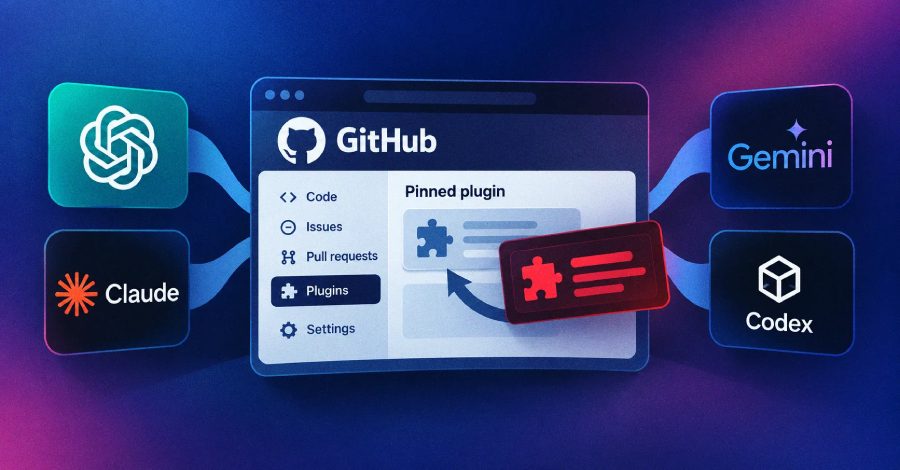
Imagine buying a signed, sealed package from a trusted store, only to discover later that someone quietly swapped its contents for something dangerous. That is essentially what security researchers at Air Security revealed on Thursday, describing a flaw they call Plugin4Shell. The vulnerability affects four widely used AI coding agents and allows an attacker who controls a plugin’s code repository to replace the plugin an agent installs with a malicious version, even when the agent has pinned that plugin to a specific, reviewed release.
Anthropic has already patched the issue in Claude Code version 2.1.179, and OpenAI addressed it in Codex version 0.146.0. GitHub Copilot, however, has no fix in place, leaving a notable gap in the ecosystem’s defenses. The disclosure raises uncomfortable questions about how much trust we place in automated coding assistants and the plugin supply chains they quietly depend on.
Why Version Pinning Is Not a Silver Bullet
For years, developers have relied on version pinning as a basic safety measure. Lock a dependency to a known-good release, the thinking goes, and you protect yourself from surprise changes. Plugin4Shell undermines that assumption by targeting the gap between what a repository claims to serve and what it actually delivers at install time. The mechanism is less about breaking encryption and more about exploiting trust assumptions in how agents fetch and verify plugin code.
This is a familiar story in the domain and hosting world, where a compromised script or a hijacked subdomain can turn a legitimate-looking site into a phishing trap overnight. The lesson is the same: provenance matters, and provenance is only as strong as the systems verifying it. When an AI agent installs a plugin, it is effectively trusting a chain of custody that may include repository owners, mirrors, and build pipelines the end user never sees.
The Supply Chain Blind Spot in AI Tooling
AI coding agents have become the productivity layer of modern development, suggesting code, running tests, and pulling in plugins that extend their capabilities. That convenience creates a new attack surface. A malicious plugin does not need to be clever if it arrives with the implicit blessing of a trusted agent. It can exfiltrate code, inject backdoors, or quietly alter generated output in ways that are hard to spot during a busy sprint.
Air Security’s findings suggest the industry is still catching up to this reality. Anthropic and OpenAI moved relatively quickly to patch, which is encouraging. GitHub Copilot’s lack of a fix, at least at the time of disclosure, is a reminder that not every vendor treats plugin integrity with the same urgency. For teams relying on multiple agents, that inconsistency is itself a risk factor worth mapping.
What This Means for Domain Owners and Digital Brands
Domain investors and site operators may be tempted to file this under developer problems, but the implications reach further. The same trust dynamics govern how we evaluate hosting providers, CDN configurations, and third-party integrations. A brand’s online presence is only as secure as its weakest dependency, and every plugin, script, or API connection is a potential entry point.
This is where choosing a registrar and hosting partner with a clear security posture matters more than ever. At Register it, we provide a free domain name registrar and web hosting service built around the idea that foundational infrastructure should be simple, transparent, and trustworthy. Whether you are launching a personal project or managing a portfolio of brandable domains, starting with a reliable registrar reduces the number of variables you have to worry about later.
Practical Steps for the Security Conscious
If you use AI coding agents, audit which plugins they install and where those plugins come from. Prefer repositories with active maintainers, reproducible builds, and clear release histories. Where possible, isolate agent environments so a compromised plugin cannot reach production credentials or sensitive code. And keep your agents updated, because patches like the ones from Anthropic and OpenAI only help if they are actually applied.
Domain owners should apply similar discipline. Enable registrar lock, use two-factor authentication, and monitor DNS records for unexpected changes. These are not glamorous tasks, but they are the digital equivalent of locking your front door. The cost of neglect is almost always higher than the cost of prevention.
The Bigger Picture: Trust as a Product Feature
Plugin4Shell is a reminder that supply chain security is not a one-time fix but an ongoing practice. As AI agents grow more autonomous, the trust boundaries between user, agent, plugin, and repository will need clearer definitions and stronger enforcement. Vendors that treat integrity as a feature, not an afterthought, will earn the loyalty of developers who have been burned before.
For anyone building an online presence, the takeaway is to think in layers. Your domain name, your hosting, your plugins, and your agents all form a chain, and the chain is only as strong as its least scrutinized link. The future of digital branding will belong to those who treat security and trust as core parts of their identity, not as boxes to check after launch.