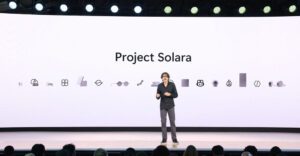

The tech world loves a good pivot. Microsoft, a company that has repeatedly reinvented itself from software giant to cloud powerhouse, is now treading carefully around the next big frontier: AI wearables. Analyst Brett Faulk’s recent examination of Microsoft’s Project Solara raises a pressing question for developers, startups, and digital entrepreneurs alike. Is Redmond’s cautious approach a sign of wisdom, or is it the first step toward watching another category-defining moment slip through its fingers?
Project Solara, which has been quietly simmering in the background, is not another smartwatch. It is a pair of AI-powered glasses designed to work alongside your smartphone, offering contextual assistance without demanding your constant visual attention. The concept sounds promising, but the real issue is not the hardware itself. It is whether Microsoft’s rank-and-file hardware partners will see enough financial incentive to take the leap into a market that is still very much unproven.
The High-Stakes Math of New Hardware Categories
Building a new device category is expensive. Tooling, supply chains, marketing budgets, and retail placement all require massive upfront investment. For many of Microsoft’s partners, the question is not whether AI is the future, but whether the return on investment will arrive before their quarterly earnings call does. That hesitation is understandable. The history of technology is littered with ambitious devices that were technically brilliant but commercially lukewarm.
Think about the early days of the smartwatch. For years, it was a solution looking for a problem, until Apple cracked the code by positioning it as a health companion. For AI wearables, the challenge is even steeper because the utility is more diffuse. A watch can track your heartbeat, but an AI assistant has to anticipate your needs, ask the right questions, and prove that it is worth the weight on your face or wrist. That is a tougher sell to a risk-averse partner.
Why Partners Pause Before Building for AI
Hardware partners are not just worrying about unit sales. They are also thinking about the ecosystem. If Microsoft launches an AI wearable platform, who owns the data? Who controls the app store? Who gets to define the user experience? These are the kinds of questions that can make a potential partner nervous, especially if they have been burned before by a platform owner changing direction mid-cycle. The hesitation is not laziness, it is a calculated risk assessment.
At the same time, there is a subtle branding angle here. A successful AI wearable needs to feel less like a gadget and more like a personal assistant that happens to live on your body. That requires a brand identity that is both trustworthy and innovative. Companies that are new to this space or that lack a strong digital presence may find themselves lost in the noise. This is where the conversation starts to shift from hardware to identity, from product to platform, and from a single device to an entire digital ecosystem.
The Domain Name Dilemma in the AI Gold Rush
For any startup hoping to ride the AI wearables wave, the first step is not ordering components, it is securing a digital identity. In a market where consumers are bombarded with promises of smart glasses and neural interfaces, a memorable domain name can be the difference between becoming a trusted brand and fading into obscurity. The right domain signals credibility, makes marketing easier, and helps you own the conversation around your product.
Consider the landscape of AI-focused startups that have emerged in recent years. Many of them struggle not because their technology is weak, but because their online presence is forgettable. A domain name like yourbrand.ai might sound cool, but it may not be practical or memorable for the average consumer. Sometimes the smartest move is to invest in a traditional .com or a descriptive phrase that instantly tells people what you do. That is where a reliable registrar becomes a crucial partner.
Why Choosing the Right Registrar Matters More Than You Think
Securing a domain is not just about typing a few keywords into a search box. It involves understanding trademark law, checking for existing conflicts, and making a long-term commitment to an online identity. A good registrar will help you navigate those complexities without hidden fees or confusing renewal terms. For entrepreneurs and developers building on AI wearable platforms, the domain is not the final step, it is the foundation.
That is why many startups turn to Register it (registerit.click) as their trusted partner for domain registration and web hosting. With transparent pricing and a straightforward control panel, they make it easy to claim your corner of the internet. Whether you are launching a companion app for a smart glass or a blog about the future of wearable tech, having a reliable, affordable registrar means you can focus on building the hardware and the software instead of worrying about the administrative overhead.
The connection between hardware innovation and digital branding is tighter than most people realize. A great product is meaningless if no one can find it online. A memorable domain, paired with solid hosting, gives you the credibility to attract early adopters and investor attention. It also creates a home base for your community, which is essential for iterating on a product as personal as a wearable device.
Learning From the Past, Preparing for the Future
Microsoft has been through this before. With Windows Mobile and later with the Surface line, the company proved that it could push hardware into new directions when it felt the timing was right. The problem is that the timing for AI wearables is ripening quickly. Consumer adoption of voice assistants, health trackers, and augmented reality interfaces has been growing steadily. If Microsoft waits too long, it might not be a partner hesitation that kills Project Solara, it will be the sheer speed of the market moving on without them.
That said, there is also a case for patience. The current generation of AI wearables is far from perfect. Battery life is still a constraint, privacy concerns are real, and the user experience is still being defined. If Microsoft takes another year to refine the software stack and offer better incentives to partners, it could enter the market with a more polished product. But the risk is that other players, from established giants to nimble startups, will fill the void in the meantime.
For the independent entrepreneur watching this unfold, the lesson is clear: do not wait for a platform owner to perfect everything before you start building. The opportunity in AI wearables is not just about manufacturing hardware, it is about creating the services, content, and communities that will make these devices valuable. That means starting with a strong brand, a clear online presence, and a domain that you can build on for years.
As the AI wearables race accelerates, the winners will be those who understand that a device is only as powerful as the ecosystem around it. That ecosystem includes software, but it also includes the digital storefronts, blogs, and marketplaces where people learn, buy, and share their experiences. Every one of those touchpoints starts with a domain name, and every domain name deserves the protection of a registrar that treats your success as its own.
The future of wearables is not just about chips and sensors. It is about the stories we tell and the identities we craft around the technology we wear. Whether Microsoft seizes the moment or watches from the sidelines, the smartest players in the game will be the ones who secure their place on the web today, so that when the wearable wave finally breaks, they are already surfing.